
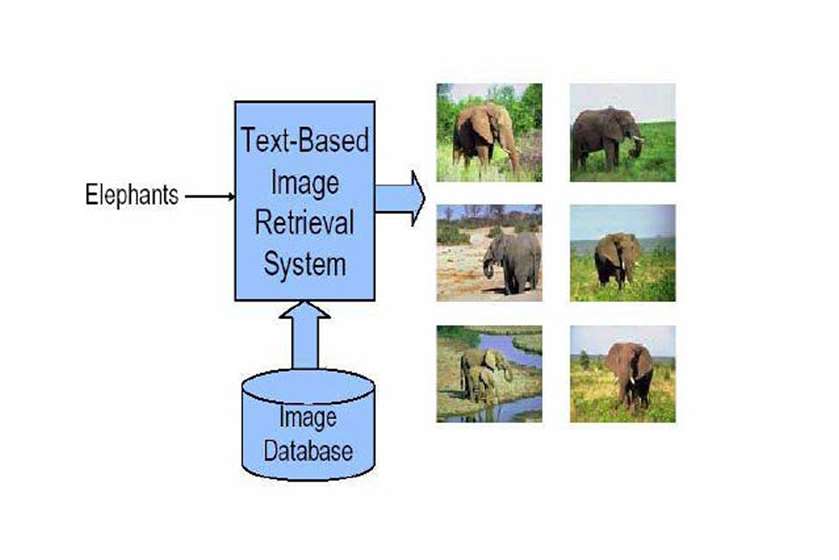
Have you heard about content based image retrieval? It may sound futuristic but it has been used for quite a long time. Although not widely used, it is still an important tool for all your image searches. There are many CBIR techniques which may help you in your image retrieval process.
If you want to know more about the shape based image retrieval or applications of image retrieval system, then keep on reading this article. Let’s take a look at the concept of content based image retrieval.
What Is Content Based Image Retrieval?
Content based image retrieval (CBIR) was first introduced in 1992. It was used by Kato to describe his experiment on automatic retrieval of images from large databases. These images are retrieved basis the color and shape. Since then, CBIR is used widely to describe the process of image retrieval from large and complex databases. The extraction process is automatic. Keywords do not have a role in CBIR because those terms can be understood. The images are retrieved based on their texture, color, pixels, and shape. CBIR is different from classic information retrieval systems which were unstructured.
(Image Courtesy: AI Gun)
Content Based Image Retrieval Techniques
Many CBIR systems have been developed to solve the problem of retrieving images based on their pixels, but this has been a roadblock in the CBIR techniques. Some of the CBIR techniques are:
#1. Color
This technique measures the color similarity between what is asked for and what is in the database. The images are examined based on the colors they contain. It is the most widely used technique. It is completed without regard to size or orientation of the image.
#2. Texture
This technique looks at the visual patterns in images and how they are defined. It is a difficult concept to understand. The texture is identified by modeling texture as a 2D gray level variation. Images are compared based on the degree of contrast, regularity, coarseness, and directionality. There are other methods of distinguishing textures which are Co-occurrence matrix, Laws texture energy, and Wavelet transform.
#3. Shape
This CBIR technique does not refer to the shape of an image, but it refers to the shape of a particular region that is being searched for. Some shape descriptors include Fourier transform and Moment invariant.
Applications Of Image Retrieval System
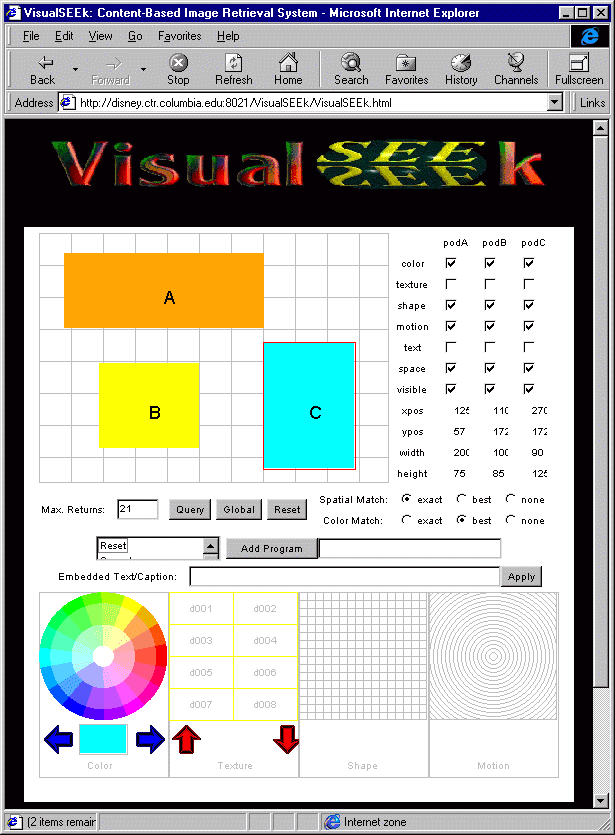
The CBIR is used in many areas. It is most commonly used in architectural and engineering design, Crime prevention, Intellectual property, Medical diagnosis, Military, Photograph archives, Retail catalogs, Nudity-detection filters, Face Recognition, Textiles Industry. Some of the systems that have been developed for this purpose are IBM’s QBIC, Virage’s VIR Image Engine, Excalibur’s Image Retrieval Ware, Visual SEEk and Web SEEk, Netra, MARS, Vhoto, Pixolution, MIT’s Photo book, Columbia University’s Web SEEk, Carnegie-Mellon University’s Informedia, iSearch.

(Image Courtesy: INFOhio Guides)
If you found this article to be informative and interesting then let us know in the comments section below. Also, will you try any of the content based image retrieval techniques?
(Featured Image Courtesy: Fig1)


