

Getting fitter, bit by bit is today's trend. And for that matter, you must have also heard about technological devices that help you track your fitness. Fitbit being one of them is quite popular these days, and you might have seen your friends sporting those alien-inspired bands.
But what exactly is a Fitbit? How does Fitbit work? How accurate are Fitbit trackers? And how Fitbit estimates calories burned? Let's find out.
When someone's referring to their Fitbit, the shortest answer to the same is their activity tracker whatever model be it. However, Fitbit is basically the company that makes technology based fitness products with a list of features but ultimately aims toward tracking your activities.
It's a wearable technology device that's capable of tracking your sleep, walking steps and heart rate, etc. Some even allow you to send/ receive calls and messages along with GPS connectivity for mapping out your progress. In short, Fitbit is your very own 21st-century pedometer.

(Image Courtesy: eBay)
How Fitbit works depends upon the trackers that it makes use of. The equipment is really simple and makes use of a certain algorithm that's designed for tracing specific motions and patterns. You just have to clip it on, and data logging starts right away. Fitbit tracks a majority of your physical activity with the help of high-tech integrated software that also encourages you to be more active and healthy. The device is motion-sensitive, so it easily detects how strenuous each of your motion is.
Battery life and memory are quite efficient to store a week's data altogether. You can make use of the smartphone application to log data manually or through your web account. Once you accomplish a certain goal, there are virtual badges for you to acquire. The statistic can also be compared with the approved friends and not publically. Technology is pretty sophisticated for converting raw accelerometer data into valuable information.

(Image Courtesy: Wareable)
All the Fitbit trackers are equipped with your personal data along with the continuous flood of motion information. The web account enables an individual to enter details about their meals, age, weight, height, and gender. Independent examiners estimate the system to be about 90% accurate.
However, for some, the tracker is useless. It may count your driving as steps, may consider your stable movement as sleep. But on the other hand, it also calculates the steps you took while brisk walking and also measures your heart rate. Hence, Fitbits work pretty well for those who understand the technology and are good at contemplating the information provided.
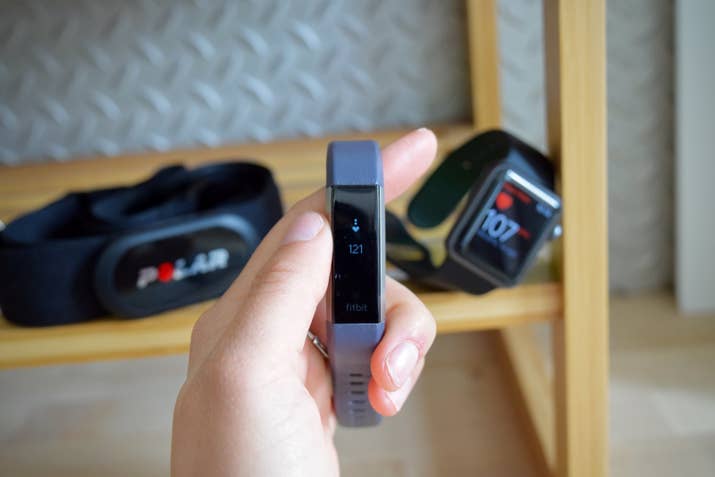
(Image Courtesy: BuzzFeed)
The parameters of steps taken and heart rate are the grounds for estimating the amounts of calories you burn each day. It also takes into account the logs that you enter manually along with the Basal Metabolic Rate (MBR) to record your burnt calories. The calorie count resets each night but starts counting immediately thereafter.

(Image Courtesy: IMore)
With a lot of trial and error flashes, Fitbit now accurately recognizes how to track and convert the exhausted energy into helpful data. The 3-axis accelerometer understands your motion, and converts the same into data that's digitally measurable.

(Image Courtesy: Best Buy)
When clipped on to your body, Fitbit tracks information relating to the duration, intensity, frequency and movement patterns to precisely determine the steps taken. The axis implementation is finely in tune with the algorithm that determines the motion size by setting a threshold. If that threshold has been met, the motion is counted as a step else not. However, it's also possible for the tracker to undercount or overcount the motion but the chances are relatively low.
Liked what you just read? Want to share your opinion or experiences? Let us know through the comment section below. We would love to hear from you!
(Featured Image Courtesy: FitBit)

12 Opinions

 Share
Share


