

Using the internet seems like an easy task for most of us millennials. Just type anything you want to know in a search engine, and you’ll be presented with millions of results matching your search.
Seems easy right? Well, the truth is far from that. The internet is a complex world and there are many processes that take place in the background which we never even think about.
For instance, we all know that every computer that is connected to the internet has an IP address. But, have we thought what an IP address is and why it is used for? Further, what is the difference between an external IP address and an internal IP address? In this article, we’ll try to find answers to all these questions. Take a look:
What Is An IP Address?
IP is short for Internet Protocol. But what is this protocol all about? Well, to understand this in simple terms, an IP address is an identification number for any network’s hardware that allows it to connect and communicate with the devices in an IP-based network, like the internet. Like your car has a number plate for identification, your computers have an IP address for the same purpose.

(Image Courtesy: Lifewire)
How Do IP Addresses Work?
Let’s get into something that happens in the background and is an extremely complex process. Whenever you do a simple Google search, there are several things happening in the background. As soon as you hit enter after typing your search terms, your computer sends a ping to Google’s IP address. Google’s servers then look at your IP address, and allow you to connect with them. This connection that is established between your computer and with the rest of the world on the internet is made possible due to your external IP address. This brings us to the difference between an external IP and an internal IP. Let’s understand the same now.
Differences Between External and Internal IP Address.
#1. External IP Address
Your external IP address is assigned to you by your Internet Service Provider (ISP). This is the main IP address that your computer or phone uses to communicate with the internet. External IP addresses are also called ‘Public IP addresses’ for the simple reason that this is accessible by anyone on the web. When you do a search on the internet, or key in a specific website, it first reaches to your ISP, from where it is further communicated to the site’s IP that you wish to visit. To understand this in simple terms: think of an IP address as the name of a person. You want to find a person in the crowd, so you call out their name. When they hear their name, they respond. The only difference on the internet is that no two websites can have the same IP address as it is something exclusive to each website and network hardware. Having said that, you as a user never need to know the IP address of any website ever. Just leave it to the servers of these websites to do the task for you.

(Image Courtesy: Corner)
#2. Internal IP Address
The term Internal IP address, or private IP address, is assigned to a network of home computers. When two or more peripherals are attached to the same LAN network, by virtue of an Ethernet cable or Wi-Fi, then you can use the internal IP address to track the devices within that ecosystem. As the name suggests, private IP addresses are not accessible by anyone else on the web, unless they are connected to your device over the same LAN network. Just like an external IP, you never need to know your internal IP, unless you wish to create a server to play games or do other things over the same LAN network.
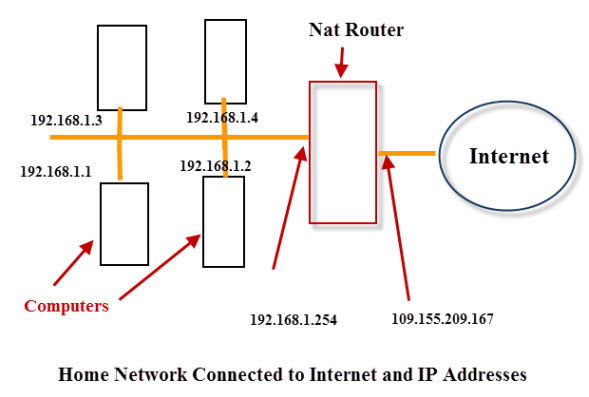
(Image Courtesy: Steve's Guide)
So, there you have it. In short, IP addresses are like ID cards for your website so that they can communicate with each other, either on the web or within a home network. If you found this article informative, let us know in the comments below.
(Featured Image Courtesy: Detective)

3 Opinions

 Share
Share


In my opinion, internal and external IP can never be the same. I somehow have this belief that no two IPs in the world can be same. Additionally, they are two different things and the likelihood of them being similar is pretty slim.