
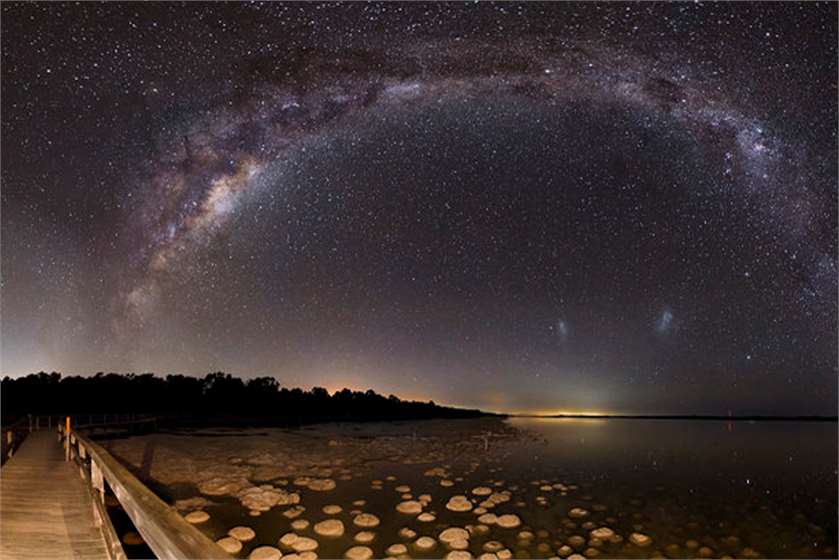
One thing which we all know is that the universe is big. But, the real question is: how big?
It might be humanly impossible to a few Earthlings to determine how vast our universe is due to the simple reason that the Earth, the Solar system, and the Milky Way galaxy are just point-sized objects in the universe.
However, that hasn’t stopped scientists in their pursuit of finding how big the universe actually is. The journey continues today, and it will likely to continue in the next century, as new technology comes to the fore, and as new discoveries are made. Until then, let’s find out the answer to what we have at our disposal right now.
To know how big the universe is, let’s for a moment look at it in a different way: Let’s look at it in terms of light! Yes, light is not instantaneous as we perceive it to be. The truth is it takes time for photons to reach from one point to the other. The funny thing is that by the time you read this, these photons have already covered the Earth 250 times!
After the sun, the closest star to us is the Proxima Centauri. The light that leaves from there reaches Earth in about four years. So, we say that Proxima Centauri is four light years away from the Earth. In fact, a light year is a measure which is used to figure out the distance between two cosmic bodies that lie in the vast horizons of our universe.
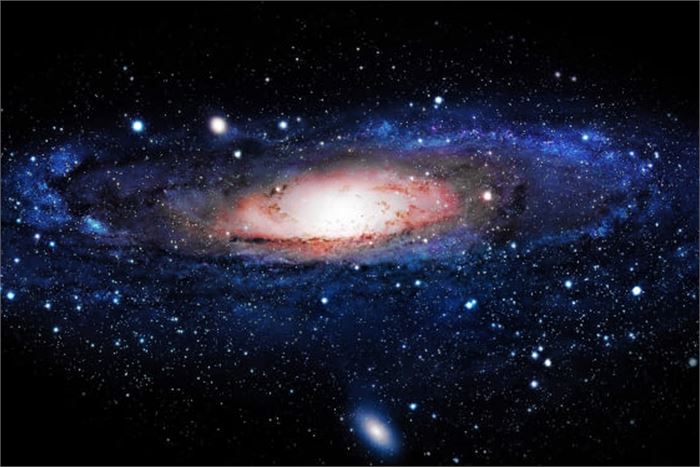
(Image Courtesy: 9Gag)
But, there is a catch here: when you see Proxima Centauri on the Earth, you don’t see it in its current state, rather how it was four years ago. In fact, everything we see in the universe is as they were in the past.
The universe is about 13.8 billion years old. So, any light that we see from the universe has been traveling for 13.8 billion light years. However, this is only what scientists call the ‘observable universe.’ The universe, as we know, has been constantly expanding and that brings us to the fact that the universe is nearly 46 billion light years away today which makes the diameter of the observable universe to be 92 billion light years.
This data is only right if we assume the Earth to be in the center of the universe; an assumption which might or might not be true. The truth is, we don’t know what’s out there and simply because we can’t see land, it would be wrong to place humankind in the center of the vastness. Also, this data is only true when assumed that the expansion of the universe is taking place at a constant rate. Scientists at the University of Oxford conducted a few experiments and came out with the results that stated that the rate of the expansion has been gradually slowing down.

(Image Courtesy: Daily Express)
Further, this assumption holds true when we assume the universe to be like a sphere. The limitation to this assumption is that we can’t conclude that. Because if we did, it would mean that the universe is finite and not endless. This jeopardizes the common belief that the universe is a flat and infinite stretch of space. Even NASA claims that the universe is flat and that tells us that there is no number that we can put to the vastness of the universe. It is infinite, it is endless.
In conclusion, all we can say is that the universe is bigger than anyone of us can ever imagine. It might be a sphere or it might be flat, but how big it is, is a question that perhaps will take a few light years to be solved. The universe is so big that light, with a speed of 671 million mph, has been able to cross it in 14 billion years, and that, the universe is constantly expanding.
(Featured Image Courtesy: NASA)

5 Opinions


To answer how big the universe is like asking to put infinity in limitations. Considering the fact that our very galaxy, the Milky Way is gigantic and it would be highly improbable to make out is size, one can only scratch their head over the size of the entire universe. While scientists are doing their utmost best in order to figure out the size of the vast space, one has to remember that the technology available to Earthling is limited. We might take centuries to be able to come also to what the actual size of this giant universe is and even then it would be stretch of the imagination to say that we will be able to gauze the real size of the universe.
Though the article does give some really interesting information and made a really good attempt in explaining the point.