

You have likely heard A.M. or P.M. being suffixed along with the time when we ask for it from someone. But, what do we mean by am and pm? What does am, and pm stand for?
A.M. and P.M. have been used for more than 3,000 years now, as it gained reputation back in the 17th century when the English speaking countries opted for it.
What Do AM And PM Stand For When Referring To Time?
The shortest answer to this question is that A.M. stands for 'Ante Meridiem', a Latin word that represents the time of the day before noon. P.M. stands for “Post Meridiem,” another Latin word the time after noon.
A.M. = Ante Meridiem = Before Noon (12 AM – 11:59 AM)
P.M. = Post Meridiem = After Noon (12 PM – 11:59PM)
The world today relies on two primary timekeeping systems. The first is the famous 24-hour clock method on which the military time functions. The second is the 12 hour time keeping system popular in the United States. The twelve hour time keeping system is used by the United States, Australia, Malaysia, New Zealand, Columbia, Philippines, Many areas of Canada, and some other countries too.

(Image Courtesy: Javatpoint)
AM and PM are represented differently in English, Greek, Portuguese, Russian, Hebrew often by using special characters or by changing the order of the hour and minutes, or by simply using the verbal descriptions after the stated time (e.g., 8 in the morning)
Each hour of every day as per the 12-hour timekeeping system is suffixed with an a.m. or p.m. to specify if the time is in the morning (AM), afternoon (PM), or evening (AM and PM). The simple way to remember when to use am and pm is by just remembering that noon is during the day (sunlight) and midnight is during the night.
The invention of the sundial led to the use of a.m. and p.m. since 1500 B.C. in the ancient Egypt. The Egyptians are accredited for dividing the day into 24 parts or 'hours.' The sundial uses the positions of the sun in the sky to calculate the time changes.
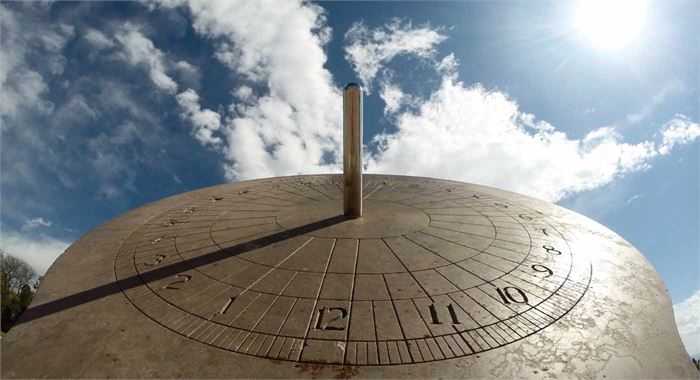
(Image Courtesy:saveoursundial.com)
The 12-hour timekeeping is constructed with Noon (12 p.m) as the meridian (center) instead of midnight (12 a.m) because the sundial would not work in the middle of the night. The creation of AM (ante meridiem or before noon) and PM (post meridiem or after noon) was compulsory to define the closeness of the sun with the meridian (noon). Because the inventions of sundials took place before the notation of zero, the number assigned to the middle of the day was 12.
Did you know that the invention of the sundial led to the origination of clocks and modern digital time keeping? Let us know in the comment section below.
(Featured Image Courtesy: Curiosity Aroused)

5 Opinions

 Share
Share


Well-written article. It cleared all my doubts.