
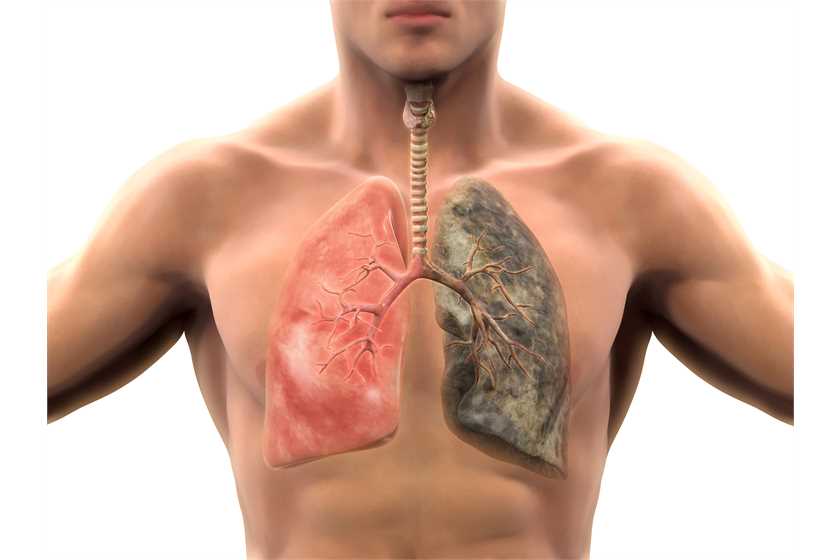
Cigarette smoke is constituted by several hazardous chemicals which could prove to be fatal for the human body. Among these, nicotine, tar and, carbon monoxide are some of these substances which when finds entry into the body, results in an undesirable interference with lung functionality in filtering the air that we breathe in and the respiratory pathways responsible for the circulation of air throughout the body. Thus, smokers are at a potential risk of being subjected to ailments such as sudden cold and wheezing cough, problems related to breathing and in some cases, may develop lung cancer, emphysema, and Chronic Obstructive Pulmonary Disease (COPD). Victims of secondary smoking are not safe either, instead, according to research they are at a greater risk of being exposed to carcinogens which could lead to the development of lung cancer.
Cigarette smoke has been associated with an incidence of certain short-term effects on the lung functions which are even though sudden but are not persistent. Common cold and pneumonia have been identified with such short-term impacts of smoking. However, in certain cases, chronic ailments such as lung cancer and emphysema could result, which even though bring about slow changes in the lungs are persistent and manifest to result in a long-term illness, in which case the damage is too late to be reversed.
Worrying about whether or not smoking leads to short-term or long-term debilitating conditions becomes futile, considering the lack of knowledge of most of the people as smokers, of the physiological alterations of lungs and airways induced by cigarette smoking. Cigarette smoke is an irritant to the lungs alongside being the cause of lung inflammation. Thus, often resulting in coughing among smokers. An increase in the number and size of cells producing mucus lining the lungs and these air pathways enhances the production of mucus. The concentrated mucus clogs the air passages and impairs the cleaning functions of the lungs. The build-up of mucus in the lungs paralyzes the movement of the cilia, the tiny hair-like structures lining the respiratory system helping in filtering the air from dust and particles. Lung congestion is thus, a common outcome. As the body’s response to smoking, the lungs age prematurely, narrowing air passages, decreasing the supply of oxygen to the body. Cigarette smoking may alter the normal functions of the lung cells causing them to become cancerous. Besides, cigarettes increase the exposure of smokers to infections, due to the dysfunction of the defense system of the lungs.
Cigarette smoking is attributed to multiple problems of breathing, contributing to shortness of a breath and a wheezing cough. Thus, lung and cold infections are common effects of cigarette smoking. In fact, the overproduction of mucus in the lungs increases the risks of developing chronic bronchitis, which is characterized by what is known as the smoker’s cough. The incidence of flu and pneumonia is also accentuated through cigarette smoking.
COPD is a cause of death for many smokers, blocking the circulation of air through the lungs, it has been associated with chronic bronchitis and emphysema. Chronic bronchitis produces a long-lasting cough due to the accumulation of excess mucus in the air passages, blocking air circulation. Increased exposure of the lungs to irritants in the cigarette smoke, modifies the elastic walls of lung airways, reducing the amount of lung tissue available for oxygen transport through the blood. The degree of the severity of the disease is influenced by the number of cigarettes smoked, and the time period over which an individual smokes. Though, emphysema as a chronic disorder could be life threatening. However, emphysema can be prevented by avoiding long-term smoking, lung irritants, and undertaking appropriate treatment for chest infections.
Cigarette smoke is one of the most persistent causes of asthma. People suffering from asthma; have inflamed air passages which further narrow, in response to cigarette smoke. This triggers episodes of asthma attacks leading to uncontrolled wheezing, coughing, and chest congestion, posing difficulty for it to be controlled by inhalers. Similarly, lung cancer is also a primary cause of death affecting smokers. Pre-cancerous changes in the lung tissues of smokers are more common than among non-smokers, often proving to be fatal in the long run.
Smokers in a group tend to release cigarette smoke in the air, which is, in turn, breathed in or inhaled by non-smokers due to their continuous exposure to it. Thus, anyone who resides in the close vicinity of a smoking zone experiences secondary smoking. Passive or involuntary smoking can also pose further harm to the respiratory system of non-smokers. Passive smoking brings about the risk of developing a chronic cough, lung infections, and pneumonia, the inability to control asthma as well as life-threatening diseases such as cancer.
Cigarette smoking could be detrimental to the healthy functioning of the respiratory system, owing to the damage it causes to the lungs of both smokers and non-smokers. The intent and benefits of quitting smoking can thus be validated by understanding the reasons as to how this irreversible damage could prove to be fatal to the human body.


 Share
Share


If you resemble a major part of people who have never put a single effort to think of the length or the quantity of eyelashes that they have, then you may not know how fortunate you are. You should simply look in the on TV or fashion magazines, and in the movies to see that all sharp beautiful ladies have these dark, thick and fuller eyelashes. But, there are a few people for whom that are essentially impractical.