
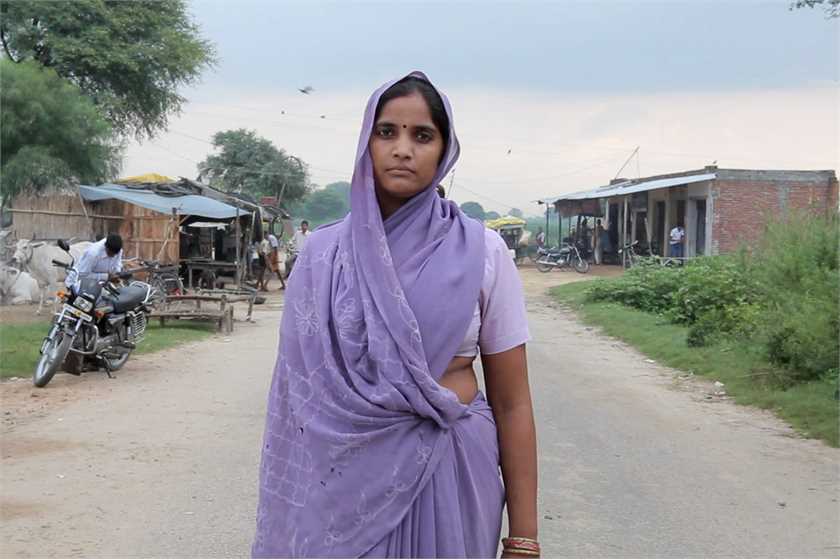
The philosopher, Simone de Beauvoir says: “One is not born a woman, one becomes one.” Indian culture plays a significant part in constructing and fixing an identity of man and woman not only in the society but in the family and also inside the house.
The Indian woman is tamed as an incapable being since her birth and is presented by the man with the standards of womanhood to be followed by her in every sphere of life, as he thought would suit her, so she does not get a clear perception of herself. The plight of women can be described by one of the shloka of Tulsidas:
"Dhol, gawar, shudra, pashu, nari, ye sab dandan ke adhikari".
(i.e., drum, illiterates, lower castes, animals, and women should be subjected to beating.)
She remains a bonded slave tied with the bows of marriage to her husband and his family. Just after marriage, her mother tells her to forget her parent’s house forever and find joy and happiness in her husband’s family. Such critical situations have been seen where she is beaten to death by her husband and on requesting for shelter in her biological parent’s house she is rejected like a stranger. She does even get a share in their property, though the Indian law has made it a rule to give a share to the daughter.
Each man has a right to have his identity through his first name followed by his surname but a woman is subjected to divided identity and that too, not of her own, but that of her father before her marriage and of her husband after her marriage. She is destined to do the household jobs of her in-law' house as if she is a slave paid in the form of food and shelter and further she has to act as an organ of reproduction to continue the name of the family. In most of the cases, if she is unable to give birth to a male child she has the uncertainty of living in the house or share her husband with a keep who helps in giving birth to a male child.
In urban areas, this condition seems to have changed a bit, as far as, her life in the parent’s house is concerned but when she marries, her life becomes the same story of a bonded laborer. Even if she is earning she has to do the household jobs in the pretext that she is a good planner and can manage the house properly.
She is expected to take care of her husband’s parents while the husband pays no heed to her parents or even to his own parents. She is expected to bring up the children if they do some mistake she is the first one to be blamed and if they bring credit the father keeps the laurels.
The dilemma of the women of India can be summed up in the words of great poet Rabindranath Tagore:
"O Lord Why have you not given woman the right to conquer her destiny?
Why does she have to wait head bowed,
By the roadside, Waiting with tired patience,
Hoping for a miracle in the morrow?"
The situation does not appear to change but a beginning can be observed in the attitude of Indian women. She has started asserting her presence in all spheres of life. She is getting higher education to find a good life partner. She is holding good positions in administration, medicine, defense, teaching, science, etc. marriage still remains a priority she is not bound to stay indoors. She is moving in the society like a free individual. She has respect in the family. But she still remains the bonded laborer.
She gets no holidays and no help from her husband (here exceptions are very few; only a handful of husbands are helping their wives). The males in the family worship goddess Laxmi and Durga but his wife labors in the kitchen without food and rest on time. She is praised for her sacrifices so that she keeps on doing such jobs to make life comfortable for the man.
She keeps hearing, ‘aadmi ke dil ka rasta pet se hokar jata he’ and this foolish female keeps cooking dishes in the kitchen. Why can the husband not satisfy himself with his own cooked food? Let woman take some rest? Let her enjoy outdoors as you would do, and this may also help in curbing some serious crimes against women.
A drift is needed not only in the case of women but also in the thinking of man. if she wants to share equal rights with men she has to leave her kitchen to her husband without the fear of it getting messy. Make him clean the kitchen. He has made your life a mess; let him understand what it is like cleaning the mess.


31 Opinions

21 Opinions

29 Opinions

38 Opinions

 Share
Share


