
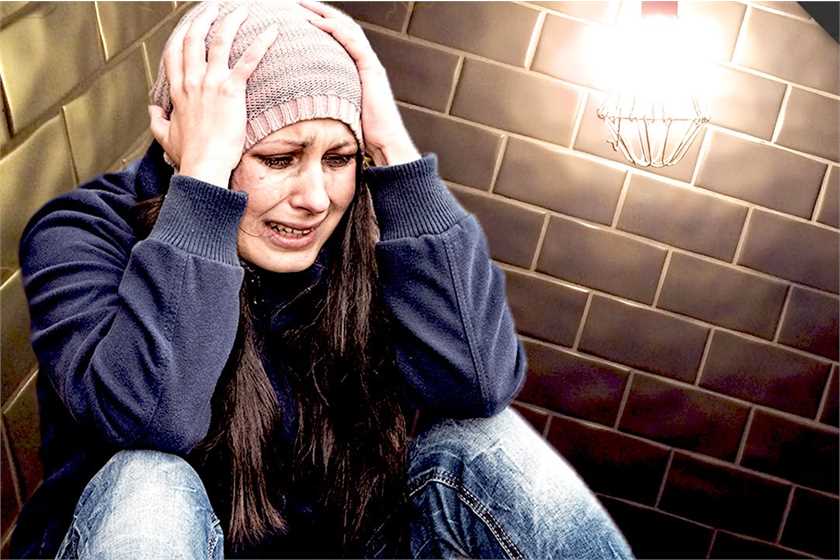
The word claustrophobia originates from the Latin word claustrum which means "a shut in place." Claustrophobia is a nervousness disorder in which a person has suffers from unfounded fear of having no getaway or being closed-in.
It recurrently consequences in a panic attack and can be elicited by certain stimuli or situations, for instance being in a crammed full elevator, an undersized room without any windows, locker or changing rooms in shopping malls, or ventilation outlet, or while traveling in an airplane. Often there is an enhancement in the anxiety level of some claustrophobics if they wear tight-necked outfits. Claustrophobics mostly try avoiding being in closed areas, for example, elevators.
The victim fears being unable to breathe well, running out of oxygen, together with anguish at being confined. They might find the ailment difficult to survive with, as they find it hard to avert small areas and situations that aggravate their tension and panic. They tend to avoid subways, underground metro trains and prefer stairs over elevators.
NYUL Langone Medical Center has noted that claustrophobia typically develops during the childhood or adolescent years of the patient.
When anxiety levels of sufferers reach a particular level, the following signs of claustrophobia are likely to occur-
Perspiration, an increase in heart rate, an increase in blood pressure, giddiness, dry mouth, hyperventilation, or 'over-breathing,' hot flashes, shuddering or trembling, butterflies in stomach, chills, panic attacks, confusion, and perplexity.
Usually, claustrophobia is the upshot of an occurrence in the past of a sufferer (mostly in early days) that has led him/her to relate small spaces with the feeling of fright or being in looming danger. Illustrations of such types of precedent experiences are - falling into a swimming pool and unable able to swim, being in a swarming area and getting estranged from parents or companions, crawling into a deep gorge and getting confined.
As the incident will have dealt some ordeal to the sufferer, it will affect his/her capability to deal with with a similar situation sensibly. The mind connects the confined area to the feeling of being in perils and the body then responds accordingly.
After the completion of diagnosis, a medical professional/psychologist might suggest one or some of the following methods of treatment help the sufferer to deal with his/her fear:
It is a well acknowledged therapeutic process for most anxiety disorders. The objective of CBT is to retrain the mind of the sufferers to feel no longer endangered by the areas or places they fear. This might absorb them to slow exposure to small spaces, thereby aiding them to cope-up with their fright and anxiety.
This type of cure can facilitate in managing the symptoms of anxiety, yet, it does not deal with the fundamental problem. Medical practitioners might use drug therapy if other intercessions have failed to generate suitable results.
Taking deep breaths, meditation, and muscle-relaxing exercises are useful in dealing with negative feelings and stress.
There are a few natural therapeutics and homeopathic medicines which some patients claim have helped them to deal with anxiety and panic.


 Share
Share


