
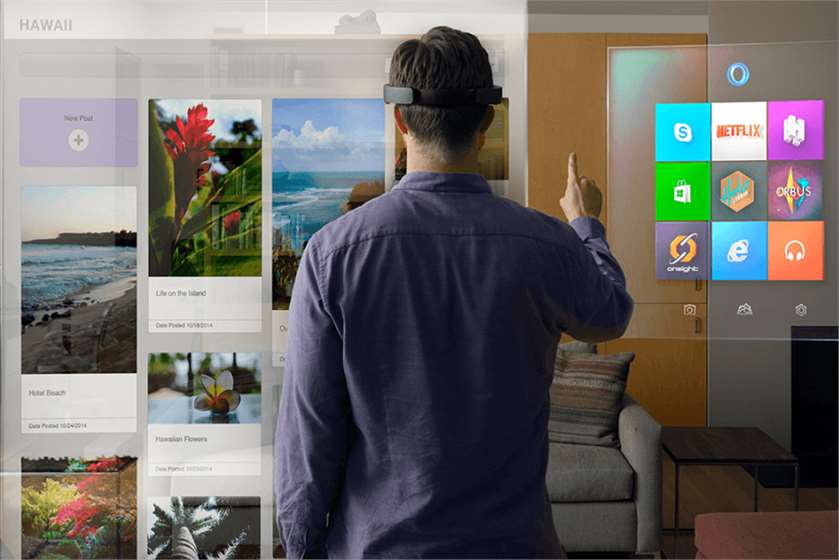
Augmented Reality has given the market a big shake. It converts the real environment around you into a digitalized one by placing the virtual objects into the real world in real time.
Here’s all you need to know about Augmented Reality.
Introduction To Augmented Reality
While Augmented Reality can be experienced through a wide variety of tools, we have shortlisted the best three amongst them.
#1. Augmented Reality 3D Viewers
It allows its users to position life size 3D models in the real environment irrespective of the absence of trackers. Trackers can be defined as simple images that can be attached to 3D models in the Augmented Reality.

(Image Courtesy: Augment)
#2. Augmented Reality Browsers
These browsers help in enriching the display of the cameras in addition to the contextual information. With Augmented Reality browsers, you can point towards a museum using your smart phone, and it’ll display its entire (museum’s) history and the estimated value as well.
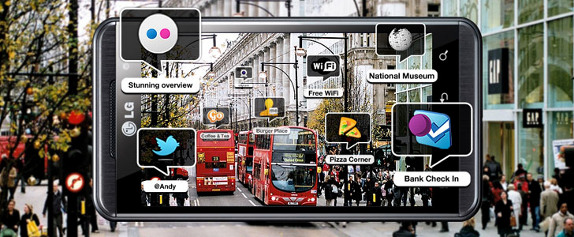
(Image Courtesy: Fone Arena)
#3. Augmented Reality Gaming Experience
Another interesting way of experiencing Augmented Reality is through gaming. It creates an enveloping gaming experience that takes into account your real surroundings. The biggest and the most popular example of Augmented Reality gaming is Pokémon Go. The player roams around in his actual environment to find out the hidden ‘Virtual’ Pokémon’s.
Augmented Reality Development
With the rapid growth in technology, we today have Augmented Reality apps that are free and are available on Android and iOS phones. Just like Google translate app that can detect text by using the cameras of your smartphone and translate it on the go, there are some more amazing and super interesting platforms that make it easier for everyone to experience Augmented Reality.
#1. Vuforia
It is one of the most finished software development kits amongst all the other augmented reality platforms. Vuforia is a feature rich AR development tool available on the mobile devices. It uses the computer’s vision to comprehend the pictures available in the front of the camera and identifies their surface. Orientation and visualization of the virtual objects are kept in sync with the orientation of the device.
Some other features that Vuforia offers are:
#. Object Recognition
#. Virtual Keypads
#. Open Support Of The GL
#. Smart Terrain
#. Extended Tracking

(Image Courtesy: Vuforia)
#2. Aurasma Studio
This one is for those who are looking for a full-fledged 3-dimensional augmented reality experience. It has a great potential of becoming a popular interactive tool in the near future. Aurasma studio is a web-based augmented reality development tool which does not demand any installations or programming. An ‘Aura’ can be implemented within 45 seconds.
You can follow some simple steps to use the platform easily:
#. Upload your image that needs to be recognized
#. Upload your overlay content
#. Resize the overlay so that it fits properly concerning the image
#. Place an additional hotspot before you save it.
#. You are done!

(Image Courtesy: YouTube)
#3. ARToolkit
ARToolkit is an open source, which places it in an advantageous position. Being an open source implies that users can get a free access to the development library.
ARToolkit supports 2D recognition and mapping additional elements via OpenGL in augmented reality.
Apparently, being a free platform did not spare it from poor documentation. You will be able to develop your own game for Android, iOS, Windows, Linux and Mac OS X using ARToolkit only if you are ready to sweat it out hard.

(Image Courtesy: Blog)
Have you tried the augmented reality gaming experience yet? Let us know in the comment section below.
(Featured Image Courtesy: iamwire)


