

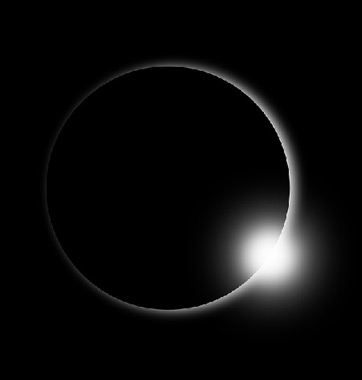
A "Lunar Eclipse" or a "Solar Eclipse" refers to events which involve three celestial bodies: the mighty Sun, the moon, and the Earth. The position of Earth, Sun, and the moon is the sole reason for the occurrence of an eclipse. And, whether the eclipse is a lunar eclipse or a solar eclipse depends entirely on the position of the three bodies.
(Featured Image Courtesy: Study)
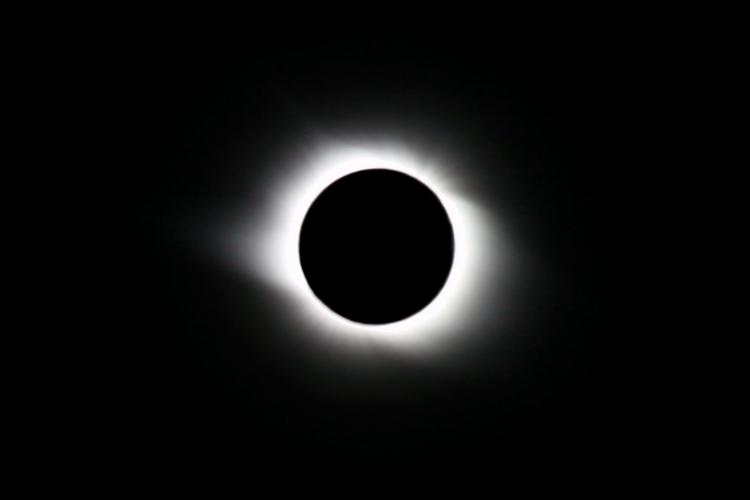
A solar eclipse generally takes place when the moon falls in between the Sun and the Earth, as a result of which the sun rays do not reach the Earth properly, causing a Solar Eclipse.
(Image Courtesy: Time & Date)
The phenomenon of Solar Eclipse is a situation wherein the moon comes between the sun and the Earth, the moon then casts a shadow over the earth, thereby causing it reflect this bizarre phenomenon.
What Is Lunar Eclipse?
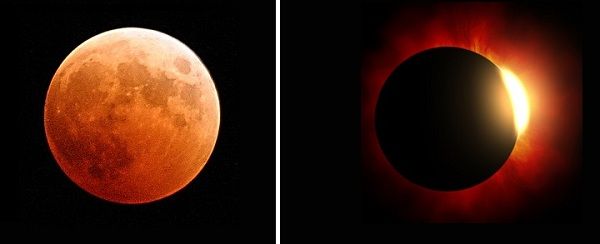
Lunar Eclipse happens when the Earth lies in between the sun and the moon, blocking the sun rays from reaching the moon. This happens only once in a year. The phenomenon of Lunar Eclipse generally occurs when the moon doesn’t have its own light and it reflects the rays of sun falling on its surface, the position of the Earth in between the sun and the moon blocks the path of sun rays, thus moon receives less light and appears tangerine during a lunar eclipse.
#1. Moon vs. Earth
In a solar eclipse, the moon is in between the earth and the sun, whereas, in a lunar eclipse, the earth is in between the sun and the moon.
#2. Night vs. Daytime
A lunar eclipse occurs during the night. A solar eclipse occurs during the daytime.
#3. Contrasting Hues
During a lunar eclipse, the moon is completely obscured, partially visible in an orangish hue. Whereas, during a solar eclipse, because the sun is blocked by the moon, the sun is visible only in some areas.
#4. Occurences In A Year
In total, solar eclipses can occur a few times every year. And the lunar eclipse, on an average, it can occur twice a year.
(Image Courtesy: Mirror)
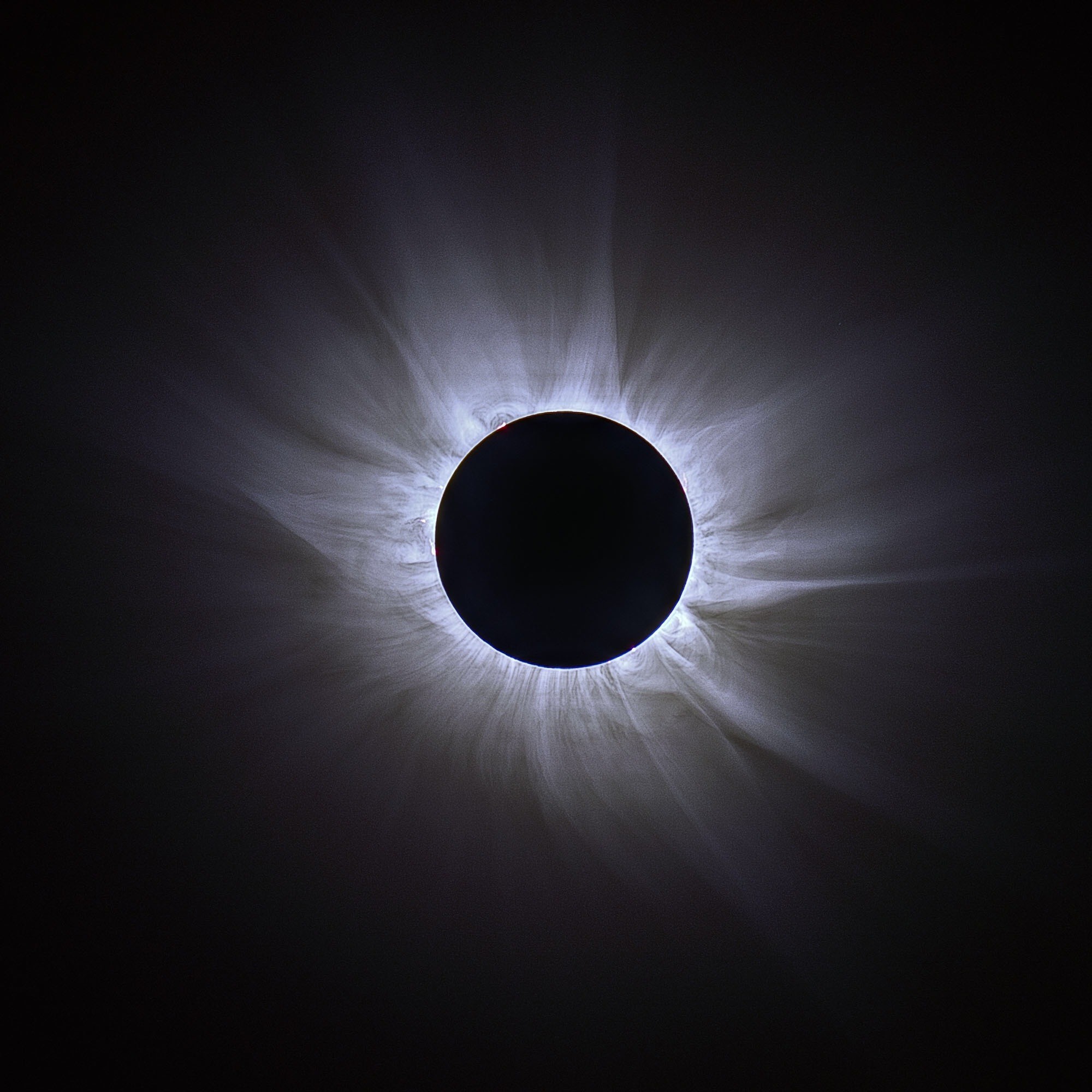
#1. Total Eclipse: Total solar eclipse, as the name suggests, occurs when the New moon comes in between the Sun and the Earth while the former casts the obscurest shadows on the latter. It is said full solar eclipse is almost dark as night.
(Image Courtesy: Augusta Georgia)
#2. Partial Eclipse: Partial solar eclipse is a part of the process leading to a complete total eclipse. In the first, when the moon starts becoming visible over the sun's disk, and in the fourth stage when the moon stops overlapping the sun- the stage is termed as a partial eclipse.
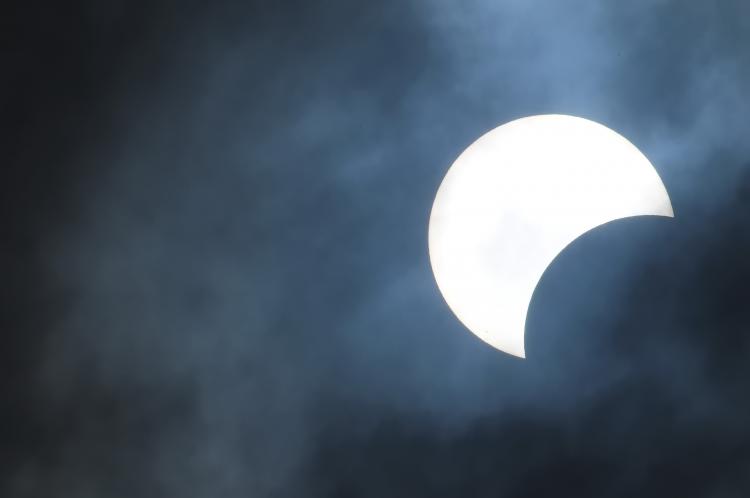
(Image Courtesy: Time & Date)
How Many Eclipses Occur In A Calendar Year?
In total, in a calendar year, there are approximately 4 eclipses, two solar and two lunar eclipses. However, there are chances of 5 eclipses in a year, but that's a very rare possibility. According to a calculation by NASA, in last 5000 years, there were only about 25 years that witnessed 5 eclipses in a year. The last time five eclipses occurred in a year was in the year 1935, and assumptions are that the next one will occur in 2206. That's quite far, and most of us won't even survive till then, sadly.

(Image Courtesy: Earth Sky)
If you found this article interesting and informative, do let us know through the Comments Section below. We would love to hear from you!
(Featured Image Courtesy: Key Difference)

7 Opinions

12 Opinions

 Share
Share


