
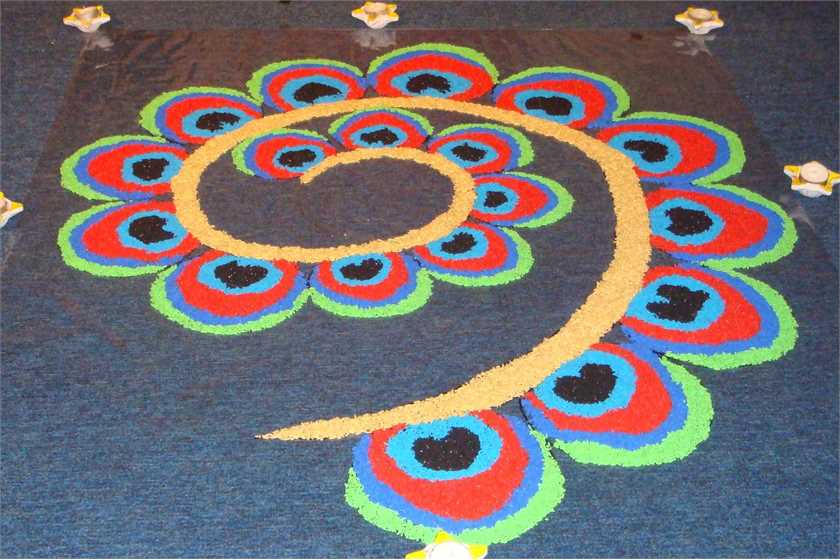
Rangoli is derived from Sanskrit word "Rangavalli". Both negative and positive energy is there in our atmosphere. Rangolis absorb negativity and prevent it from entering our house. Traditional Rangolis are made with rice powder. The other reason to put Rangoli is feeding ants and birds. If we do good karma, the animals and plants around will bless us.
Rangoli is a form of art. Women envy each other's design and it is like an art exhibition and competition. A passerby and strangers may appreciate your work. Neighbors may offer you a helping hand or give good comments also. This all maintains harmony.
A pinch of rice powder is taken using the index finger and thumb. Before drawing the Rangoli, sweep and clean the area in which you are drawing the Rangoli. Traditionally, cowdung should be applied after cleaning. Once the cowdung is dry, you can draw the rangoli. Auspicious symbols and designs are chosen for drawing. The required number of points are created. These points are joined with appropriate curves, lines and shapes. Ground smeared with cow dung and Rangoli not drawn is considered inauspicious.
Rangoli can be drawn using flowers, leaves and ornamental. Satvik Rangolis attract more positive energy. Rangolis can also be created using the petals of flowers, turmeric and vermillion.


31 Opinions

21 Opinions

29 Opinions

38 Opinions

 Share
Share


