
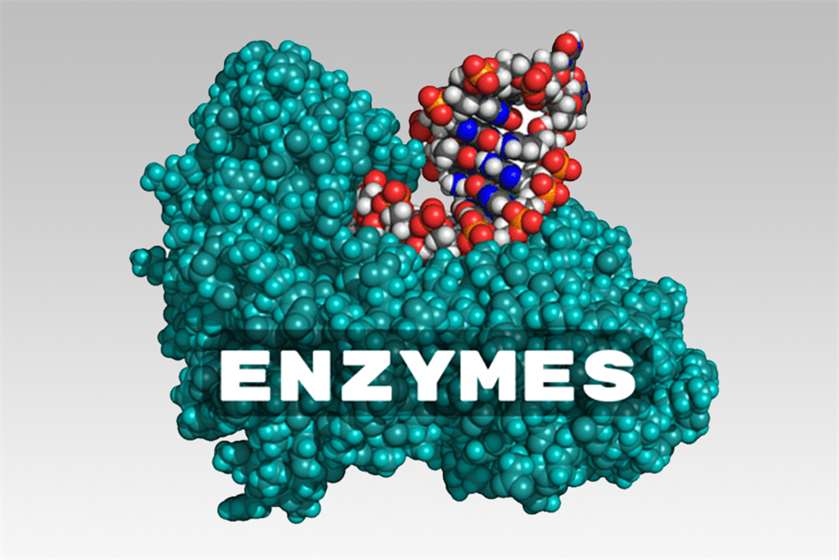
You might have come across the term ‘Enzymes’ in your biology classes. Enzymes are basically proteins that accelerate the chemical reactions in all living organisms; be it plants or animals.
Processes like digestion of meat and conversion of starch into sugar have been possible because of the active working of these enzymes.
#1. What Are Enzymes?
Enzymes are proteins which can be found everywhere in nature. They have catalytic functions which are obligatory for maintaining an active life. Enzymes are referred to as Biotransformation because all the chemical reactions that take place within a human body or any other living organism are dependent on the actions of the enzymes.
The first ever use of enzymes can be traced back to 5000 years ago when animal bellies were used as store houses for milk. The stomach contains the enzymes called ‘rennet’ that convert milk into cheese.
Today we have discovered about 4,000 enzymes along with their functions. Enzymes have replaced a number of chemicals which were used in the industrial processes, for producing margarine, beer, yogurt, concrete, leather, textiles, and ethanol. Enzymes can also be used directly in products like laundry detergents, where they work as stain removers.
(Image Courtesy: Essays in Biochemistry - Biochemical Society)
#2. What Are Enzymes Made Of?
They are made of amino acids. Each enzyme comprises of hundreds to a million amino acids positioned like beads on a string. Each amino acid is bonded with the next one by chemical bonds.
There is a unique sequence of amino acids for each enzyme which is decided on the basis of the genes in the cells. The majority of the enzymes are made up of 20 different kinds of amino acids.
The string of amino acids is convoluted for a thousand times to create a complex three-dimensional structure.
#3. Why Are Enzymes Important?
As mentioned above, enzymes are proteins and proteins work as the building blocks of all living organisms be it humans, animals, plants or any other microorganisms. About 80% of the dry muscle weight, 70% of the dry skin weight and almost 90% of the dry blood weight is made up of proteins.
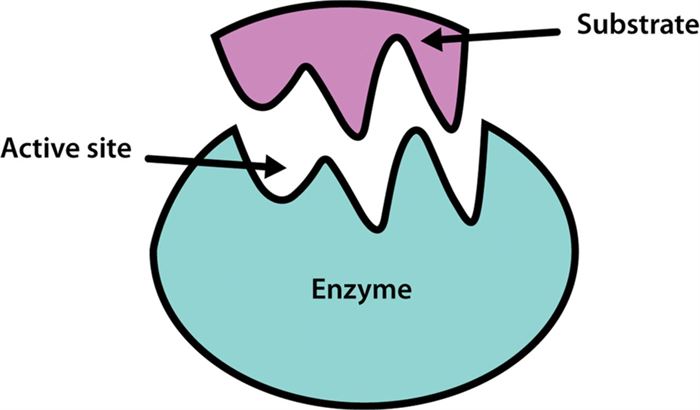
Every enzyme has a definite and crucial function in the body. Each enzyme has one function. The bio chemical reaction occurs when the right enzyme finds desirable material to work on. Because the enzymes work on specific materials, the chances of any side effects are fairly less. For instance, if the enzymes are used to transform starch into sugar, the process will take place and will have no other effects.
(Image Courtesy: Vitality Magazine)
Enzymes usually function at low temperature and moderate pH. They are comparatively more stable and are environmentally-friendly too. Because enzymes are bio-degradable, they keep on working until dissolved.
Enzymes act only as a catalyst and do not become a part of the final product. Once the biochemical reaction is over, the enzymes start repeating the process on other molecules. Enzymes have the potential of being reused for quite a number of times; hence it reduces the production costs.
Did you know that enzymes are so important in our everyday activities? Let us know in the comment section below.
(Featured Image Courtesy: YouTube)

41 Opinions

10 Opinions

8 Opinions

 Share
Share


