

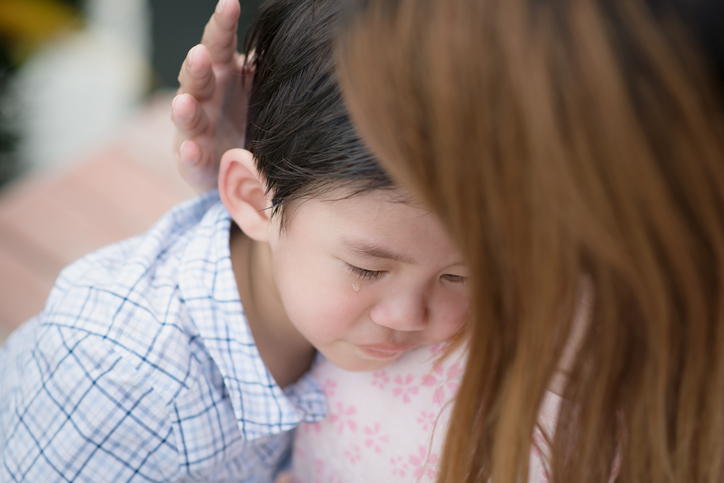
The pain of childhood trauma is severe regardless of whether it is physical, emotional or sexual. Sadly, childhood trauma is quite common in our society. The pain of childhood trauma lasts for decades even after the original incident. The incidents of children being sexually assaulted, physically attacked, verbally abused or chronically neglected have been increasing steadily. In other cases, tragic events in childhood such as the death of a parent, a tragic accident bring inevitable pain and grief with them. The aftermath of such sudden events that explode in a child's life can be physical pain, mental stress, fear and the struggle of making sense of what happened. The after effects of a childhood trauma also makes it difficult to set the future course of action constructively.
Usually, children do not have a fully functional brain that can analyze such situations rationally and get over with them quickly. They lack the skills to cope with difficult situations such as the divorce of parents, death of a sibling, and more. Studies reveal that childhood traumas can have a negative impact on the permanent development changes and can lead to a wide range of mental disorders and psychiatric complications such as depression, bipolar disorder, panic attacks and stress. In certain cases, the effects can lead to schizophrenia and other mental disorders of higher range. After facing a traumatic experience, the body of a child takes its time to get over the trauma, as a result of which the coordination between heart and mind is also disturbed.

Children who face some trauma in their childhood also tend to become adults with maladaptive and limited behaviors. They find it challenging to combat normal situations and prefer to stay isolated which creates a void in their mind. Usually, people who have had traumatic childhood do not like to interact with a lot of people and prefer to keep their emotions intact. Trauma also results in suicidal tendencies and depressive instincts. However, in most cases, the effects of trauma can be cured, and one can get over it. It is always possible to beat the ghosts of the past and become a person with high self-esteem, good social circle, and intimate relationships.
#1. Confront The Situation
The most important step towards overcoming your childhood trauma is to dive deeper into yourself and then figure out the main cause of the trauma. Is it due to a sexual assault in childhood or parental discord? Try to find the exact reason for the suffering. Sometimes, people cannot find the reason behind their anxiety, stress, and depression as they do not realize if it could be due to childhood trauma. The first step towards healing from childhood trauma is to realize the reasons behind it and confronting the situation. Acknowledge the fact that you are experiencing stress, anxiety, and fear. There is no point in living in a denial mode. Confront the situation as soon as possible in a practical manner.
#2. Get A Closure
After you have realized the situation, the next step should be to get closure. The cause of the trauma might be parents who bullied you or some relative who assaulted you sexually. There can be other reasons as well. Identify the reason and then express yourself. Say all the things that you could never express in front of anyone. It is never a good idea to bottle your emotions as it can cause a lot of mental distress and can have severe repercussions on your health. If your uncle sexually assaulted you in your childhood, then you can write a letter to him expressing that you now know what happened. Write that you expect them to be sorry about the incident and you are already trying to get over it. You can also write a letter to yourself expressing whatever you are feeling. Write detailed letters. Try to express as much as you can. Running away from the situation can never be of any help. It is always good to face the situation, acknowledge the facts and then look for possible solutions.
#3. Come Out Of The Comfort Zone
The most common effect of a childhood trauma is you grow up to be a person who is either very shy, introvert or aggressive and rebellious in nature. Both the situations are not very favorable for your mental health. If you have grown up to be the person who prefers staying isolated in his or her comfort zone, then remember that such an approach is not a healthy one. Considering the tragedy that you faced in your childhood, it is a very natural feeling to be repulsive towards social gatherings and people, in general. But, this is a fact that not everyone is same. If your parents were not there to support you in your childhood, it doesn't mean that no other person would listen to your grievances. Try to step out of your comfort zone. Speak up about your experiences with other people, be more vocal. Focus on the present, and that you can only do in a better way when you let go of the traumatic experiences of the past.

#4. Seek Help
It is always better to be surrounded by people who love and support you. If you feel difficulty in talking about your childhood trauma to others, then you can always start by sharing your experiences with your close friends. It is one of the best ways to release fear, sadness, guilt, shame and other emotions. One should not feel bad about asking for help from your close friends. You can always talk about your traumatic experiences with them and tell them about the situation clearly. They would be able to think of the situation in a more objective manner. They can be the better judge of the situation and can advise you on the best that can be done in the direction of healing.
#5. Medication
If you feel that despite persistent efforts, you are not able to change the situation, then you can always seek help from a professional. Sometimes, the condition is too serious, and we are unable to take concrete steps to heal the childhood trauma. There is nothing to be afraid of in such cases. What one can do best is go to a psychiatrist, and he or she can offer medication to improve your condition. However, it is always best to consult with a psychologist first. If you still feel that counseling is of no help, then you can always go to a psychiatrist. It is always recommended to seek help from a professional especially when you also experience fits of anxiety, stress, depression, etc. Professionals will be able to take your case in a better way.

#6. Be Strong
One should always remember that no matter how grave the situation was at one point in time, a person can always move on for the better. If you have experienced a childhood trauma, you need to remember that the struggle to overcome the fear and stress would be difficult. However, it is not impossible to beat the odds through consistent efforts. You should remember that it is imperative to stay strong. Just because your childhood was difficult doesn't mean that this is how your future is going to be. Always give yourself a chance to start things afresh and overcome the fears of the past. One can always choose to stay strong and let go of the bad experiences in life. Such an attitude can help you to direct the future course of action positively.
Have you ever faced a childhood trauma? How did you get over it? Share your experiences with us. If you like this article, then drop your comments in the comments section below. We look forward to your replies.

15 Opinions

9 Opinions


