

Vitamin B12 is a water-soluble vitamin which helps in maintaining the functioning of the nervous system and the metabolic processes. They are also essential for DNA synthesis. Vitamin B-12 affects the development of the red blood cells, the nerve cells and the myelination (covering) of nerve cells.
Since animal food is our only source of Vitamin B-12, its deficiency is quite common these days. Children who follow vegan diets, adults who find it difficult to absorb Vitamin B-12 and pregnant women who suffer from hemorrhage or intestinal disorders are more prone to vitamin B-12 deficiency.
Fatigue, weakness in muscles, shortness of breath, dizziness, numbness, heart palpitations, bleeding from gums, sore mouth, nausea, and diarrhea are some common symptoms of vitamin B-12 deficiency. A vitamin B-12 deficiency can lead to anemia, resulting in memory loss, confusion, and dementia.
Vitamin B-12 is present in various food products. Include a few of these in your everyday meals to lead a healthy lifestyle. Check out the following list.
#. Eggs
#. Cheese
#. Fish
#. Shellfish
#. Liver
#. Kidney
#. Red meat
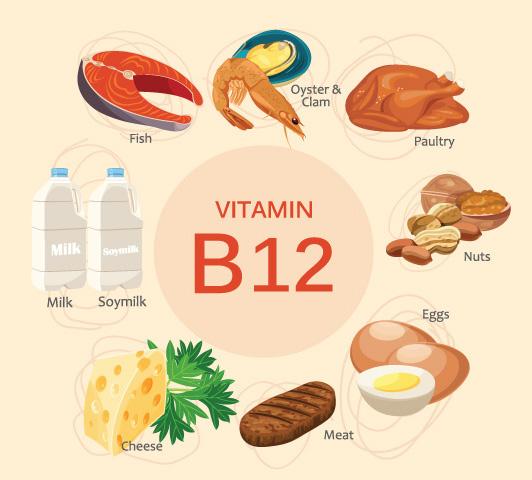
(Image Courtesy: Mom Junction)
According to the National Institutes of Health (NIH), the average daily vitamin B-12 dosage should be:
#. 2.4 mcg for people who are 14 or more in age
#. 2.6 mcg for adults and adolescent pregnant females
#. 2.8mcg for adult and adolescent lactating females
The dosage of Vitamin B12 for a Child varies from that of adults. As per the NIH recommendations:
#. Infants aging between 0-6 months should consume 0.4 mcg
#. Infants aging between 7-12 months should consume 0.5 mcg
#. Toddlers aging between 1-3 years should consume 0.9 mcg
#. Children aging between 4-8 years should consume 1.2mcg
#. Children aging between 9-13 years should consume 1.8 mcg

(Image Courtesy: The NewYork Times)
Vitamin B-12 may be excessively essential for the body, but over intake can affect the body negatively. Following are some of the side effects of consuming high amounts of vitamin B-12.
#. High blood pressure
#. Acne
#. Rashes
#. Itchy or inflaming skin
#. Pink or red skin discoloration
#. Urine discoloration
#. Nausea
#. Diarrhea
#. Low potassium levels
You should keep a check on your Vitamin B-12 intake if you suffer from:
#. Heart conditions
#. High blood pressure
#. Skin disorders
#. Blood disorders
#. Low serum levels of potassium
Seek medical attention if the system gets worse or are too persistent. You can consult your doctor to ascertain a balanced dosage of Vitamin B12 which won’t be less or excess for your body.

(Image Courtesy: The Research Pedia)
Do you have any Vitamin B-12 related queries? Let us know in the comment section below.
(Featured Image Courtesy: Ozone Therapy)

11 Opinions

106 Opinions

 Share
Share


