

The waters of the Cauvery river has been the cause for one of the most longstanding and unresolved disputes between 2 Indian states, Tamilnadu and Karnataka. Over the last week or two, the water dispute took a turn for the worse with rampant arson, looting and violence prevailing in both states with a substantial loss to property. Normal life had been disrupted with undesirable consequences to residents of both the states to the point of curfew being imposed in Bangalore.
An amicable solution to the problem at hand has not been arrived as of now and supporters from both states have organized protests, shutdowns, demonstrations and have even threatened to resort to violence against residents belonging to the opposite state. The turmoil over the waters of the Cauvery is not new to either Tamilnadu or Karnataka. It is one out of the countless times that the Cauvery water issue has left relations between neighbors, Karnataka and Tamil Nadu completely strained.
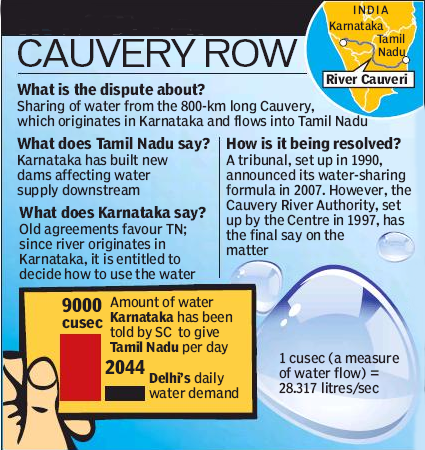
While the focal point of the dispute is the conveyance of water from the Cauvery bowl to Karnataka, Tamil Nadu, Pondicherry, Kerala, little has changed in regards to the River Cauvery and its remains after over 100 years of an extended water struggle. The Cauvery debate began in the year 1892. It was chosen to separate the river between the two states. The river which stretches nearly 760 kilometers cuts across Tamilnadu and Karnataka. Kerala and Puducherry cover a considerable volume of the Cauvery basin.
Tamil Nadu, Karnataka, Puducherry and Kerala have staked their claim to the Cauvery basin. The dispute over the waters of the river has resulted in some of the most extreme and violent protests in the country. In 2013, the Center constituted the Cauvery Management Board which was protested by Karnataka. For over 100 years, the four states have continued the tussle for the waters of the river.
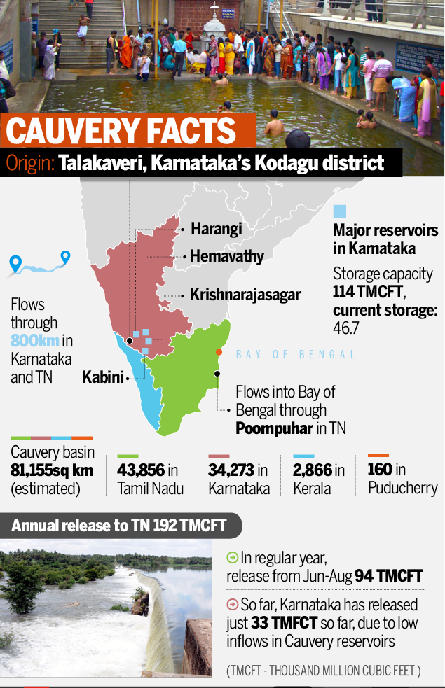
The Cauvery water debate escalates amid years that see less rain. Shortage of rainfall infers limited catchment of water, influencing the distribution of water for agriculture. This will ultimately snowball into a political standoff. As a matter of fact, Cauvery’s river basin suffers from water shortage. With an aggregate normal yearly run-off of 780 tmcft, the aggregate requested the amount of water is 1135 tmcft. This infers whatever might be the strategy of equal sharing, there will undoubtedly be a deficit.
The water use level at the Cauvery bowl is high among all rivers in the nation. As much as 90% of the bowl had been depleted by the 1990s. From there on, it was about multiple recipients, restricted water accessibility, increase in agricultural needs, and redirected land use contracting the basis even further. What exacerbates the situation is while everyone from the region has aligned with their particular states, the opinion and suggestions of water managers and experts have seldom been heard. On the contrary, the dominant subject of discussion has been the constitution of a river and the way it should govern.
The Cauvery strife includes re-sharing of an asset that is as of now being completely used. The solution revolves around an innovative approach and an out of the box thought process. Some of the strategies have been tried over and over, but seldom discussed as the primary approach and implemented for an amicable solution.


157 Opinions

231 Opinions

 Share
Share


