
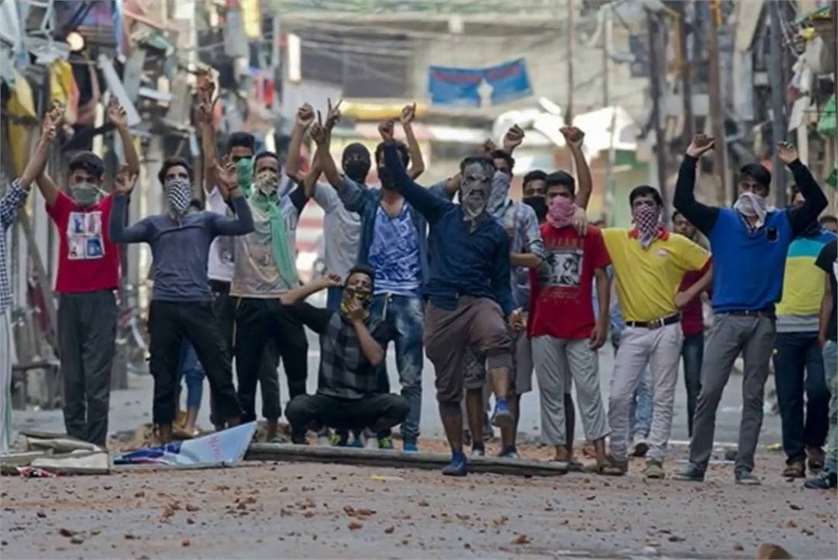
With unrest in Kashmir taking centre-stage, it is becoming more important to comprehend the growing tensions between Indian Army and the civilians. Is it the lack of fear in the institution that has resulted in their rebellion against the armed forces?
Even during civilian uprisings in 2008, people extended their support and protection to the armed forces by forming human chains around their vehicles and convoys to allow them to pass the conflicted areas without causing any harm to them. Let alone statistics to prove that civilians interrupted the operations of the Indian Army! However, over the last few years, the trend seems to have changed.
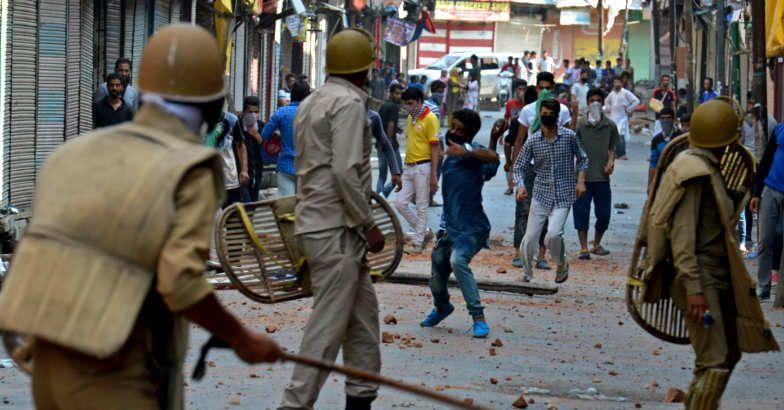
(Image Courtesy: India Facts)
Rebellious outrage by people has begun to feature as a common sight in the Valley early last year. However, the rebels came out stronger post Burhan Wani’s encounter that took place in July, last year. Ever since then, there has been a significant rise in stone-pelting cases recorded in the region, especially in South Kashmir.
The situation has worsened to the extent that the Indian Army Chief Bipin Rawat had to issue an official statement to warn those who adopt stone pelting as a practice against the army of being treated as over ground workers (OGWs) of militants.
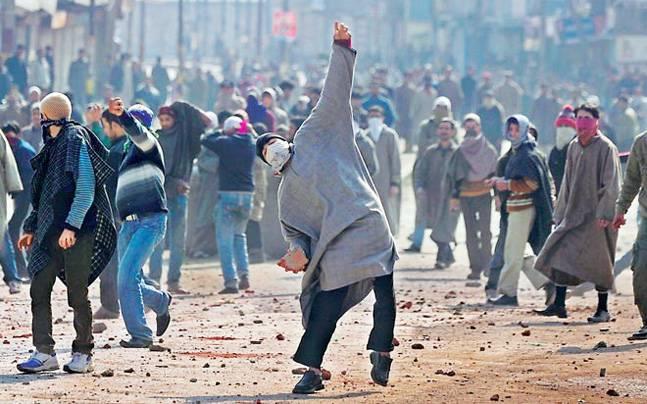
(Image Courtesy: Viral In India)
This makes us wonder as to what is really happening in the valley. There was a time when people were apprehensive to raise their voice against the armed forces. While the older generations are still scared of the army, it’s the youth, the younger generation of the valley that is becoming an issue of major concern.
Growing in a region that is always under distress, has the younger generation lost its fear of death? That’s a question whose answer is being sought by all. The manner in which the youth is acting to foil Indian Army's insurgent operations against the militants in the area is making us ponder about the future of the state. And the future does not seem bright!
(Featured Image Courtesy: YouTube)

70 Opinions

 Share
Share


