
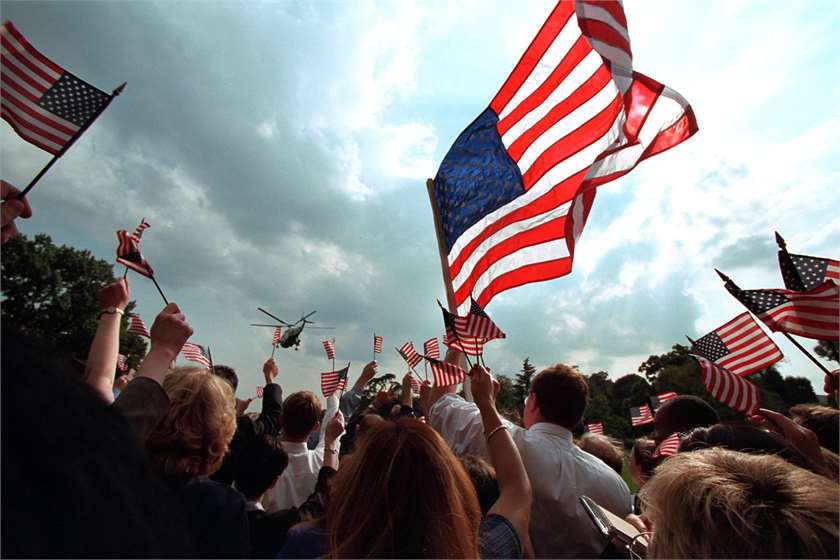
This day is of enormous significance to the people in the United States of America. It is their beloved President Donald Trump's birthday and also, their national flag day. When Donald Trump takes on the mic today to address the nation, he will speak about the national flag, the old glory. Despite his somewhat unpredictable attitude, this is for sure to happen.
This day is much more than paying tribute to the national flag. It is more about going towards it and embracing it like you never have. Your national flag is the identity of your nationality on the world map, and it also defines your nation and ultimately your ideology on the global stage.
So, as the entire United States of America celebrates the national flag day, it is a great time to know about some of the unknown facts about the Star Spangled American Banner:
The Colors Have Meaning
Although a lot of people are not sure as to why the US flag was designed in red, white and blue, some connections can be established by looking at the Great Seal of the United States. The Great Seal was created in 1785; 2 years after the original flag design and its colors were adopted from the flag itself. Consequently, the significance of the three colors can be retrofitted for the flag from the explanation of the seal, where, Red signifies hardiness and valor, White signifies purity and innocence and Blue is the color of the Chief, meaning vigilance, perseverance, and justice.
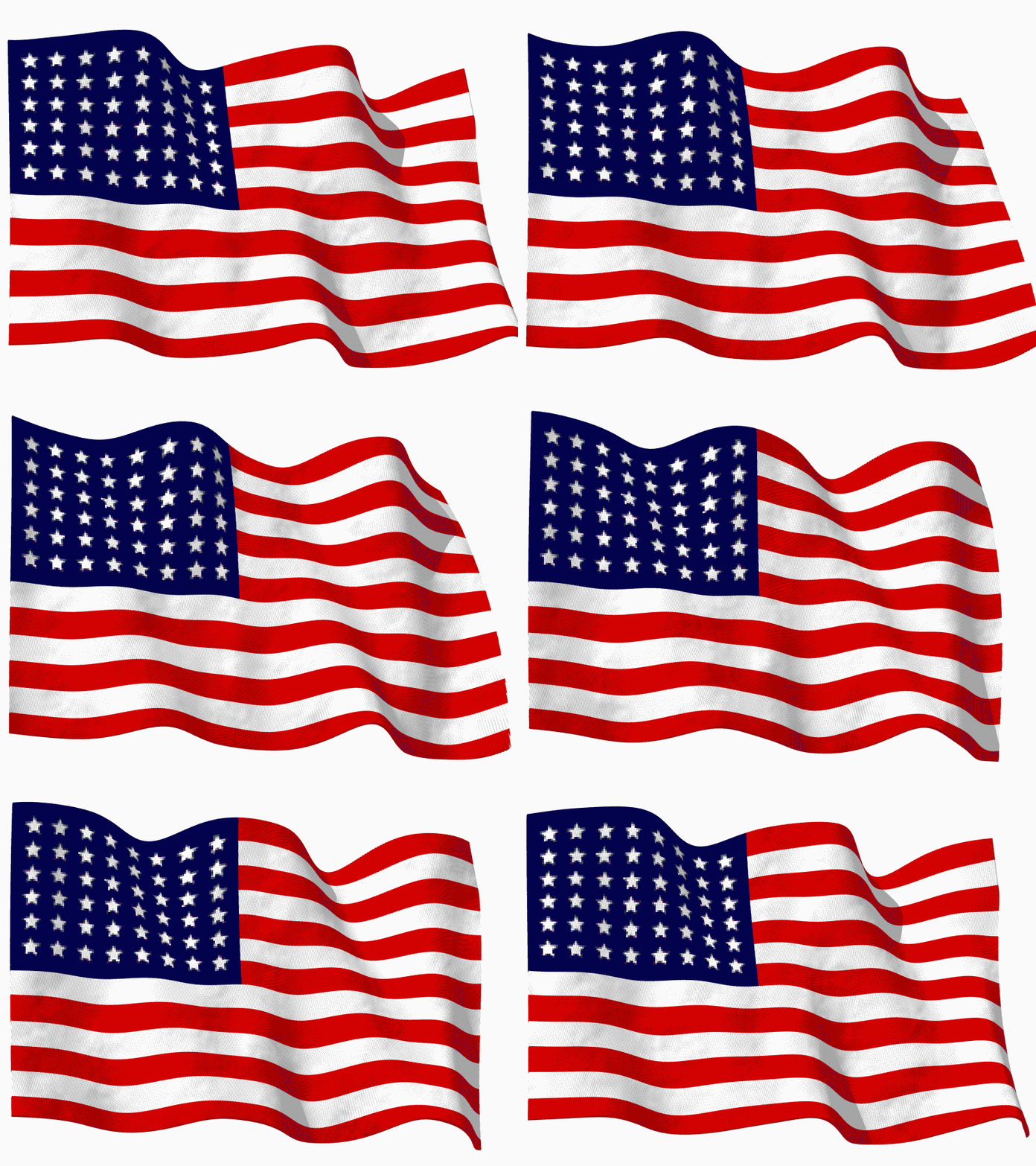
(Image Courtesy: Best Animations)
What Do The Stars And Stripes Signify?
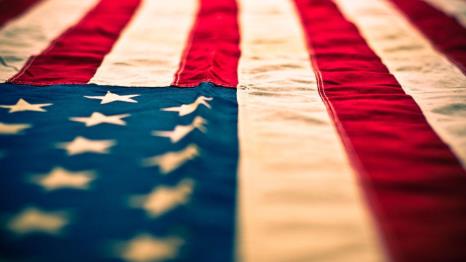
There have been 27 official versions of the American flag, starting with the first one in 1777 which displayed 13 stripes and 13 stars (for the 13 original colonies). When Kentucky and Vermont joined the Union, the flag took on two more stars, so that from 1795 to 1818, 15 stripes and 15 stars graced the flag. It was this version of the flag that inspired Francis Scott Key to compose “The Star-Spangled Banner,” during the battle at Fort McHenry. As the U.S. continued to add new states, there was concern about having to add additional stripes continually. The solution: revert to 13 stripes to represent the original 13 colonies, and let the stars do the heavy lifting.
(Image Courtesy: reference.com)
The Betsy Ross Myth Buster
Everyone knows that Ross sewed quite a few number of flags in her lifetime. However, contrary to popular belief, there is no evidence that she was behind the design of the first American Flag. In fact, her name didn’t even come up in conjunction with the deed until 1876 which is 40 years after her death. It was only one of his family members who publicly made the claim that it was Betsy after all. However, he didn’t have any evidence to substantiate his claim. But nonetheless, she is still considered to be the first designer of the American Flag.
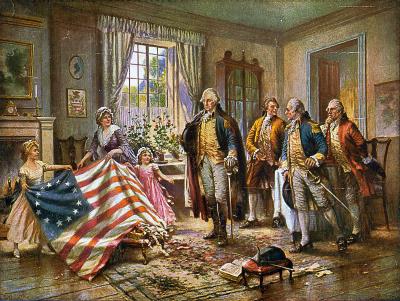
(Image Courtesy: Wikipedia)
The Current Flag was a B Grade
When Hawaii and Alaska became the 49th and the 50th state, then President Dwight D Eisenhower received thousands of ideas for an updated flag. And, the flag as it flies today with 50 stars and 13 stripes was designed in 1958 by a 17-year-old student, Robert G Heft. He submitted his design to his school teacher and interestingly she only rewarded him with a B- grade. However, when Heft’s design was chosen out of 1500 entries, she kept her promise and increased it to an A grade.
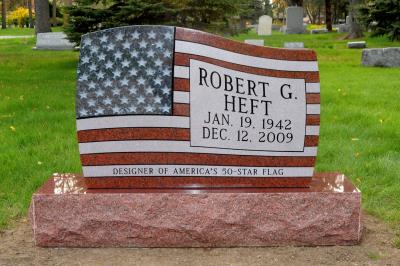
(Image Courtesy: Pinterest)
It Is Also The Longest Lasting Design
The current flag has been in operation for more than 50 years now. To put that in perspective, the flag went through over 17 changes only in the 1800s.
There have been Weird Designs Of The Flag In The Past
After it was finally decided that the stripes will continue to be 13 in number and only the stars will denote the number of states, one thing was un-codified: star layout. Without proper guidelines, there have been many designs of the flag that look weird, to say the least. Like this one:
The 26-Star “Star” Flag:
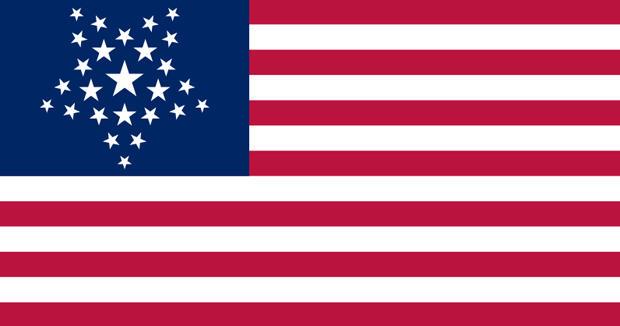
(Image Courtesy: Mental Floss)
The Flag Is Called Old Glory
In 1824, a sea captain from Massachusetts named William Driver bestowed the nickname “Old Glory” on his American flag, which crowned the main mast of his ship and had been sewn for him by his mother and other female admirers. After he retired from seafaring and settled in Nashville, Tennessee, he continued to display Old Glory outside his house proudly. Allegedly, his 10-by-17-foot Old Glory withstood numerous Confederate attempts to deface it during the Civil War, and that Driver flew the flag over the Tennessee Statehouse once the war was over. In 1922, Driver’s daughter, Mary Jane Roland, presented Old Glory as a gift to President Warren G. Harding, who then gifted it to the Smithsonian.
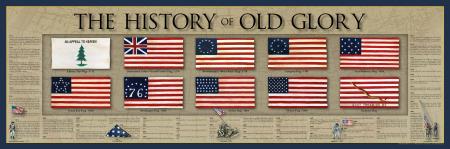
(Image Courtesy: History America)
The Flag Has A Sleep-Wake Schedule
According to Federal laws in the US, the flag should only be displayed from sunrise to sunset. The flag can remain hoisted in the night provided that it is properly illuminated.
(Image Courtesy: Shutterstock)
A Dedicated Website
There is a website that is dedicated to the National Flag of the United States of America- www.usflag.org
You can check the historical significance of the flag, some patriotic writings and about those who served America.
There Are 6 US Flags In Outer Space
Time to get a little more proud! Neil Armstrong planted the first American Flag on the moon in July 1969 as part of the Apollo 11 mission. Five more Apollo moon landings from missions 12, 14, 15, 16 and 17 resulted in five more flags. However, of these six flags, only five are still standing. The first flag planted by Armstrong has fallen down.
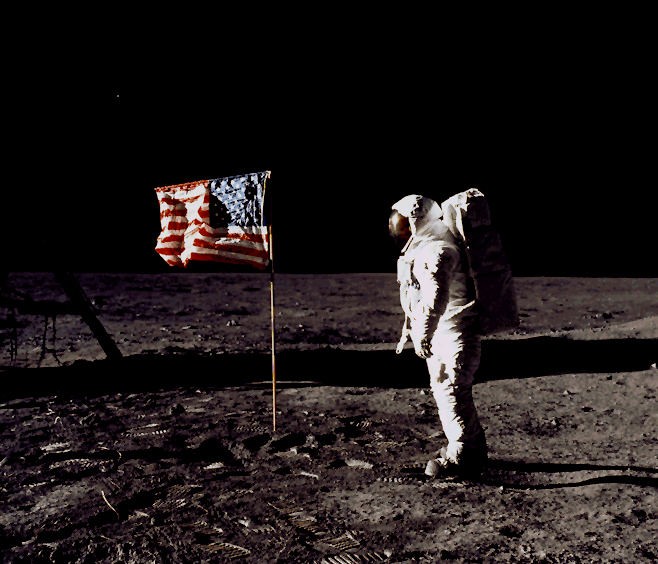
(Image Courtesy: NASA)
The National Flag Day is one great day to remember the Old Glory and bow down in its honor. It, after all, is what signifies you and your nation. Although, there can be no particular day to feel patriotic, this day can surely help in inducing similar feelings in you and turn you more towards your flag and your nation. To know more about the Star Spangled Banner, take a look at this video:
(Video Courtesy: NJ.com)
(Featured Image Courtesy: Western Seminary)

36 Opinions

106 Opinions

 Share
Share


