
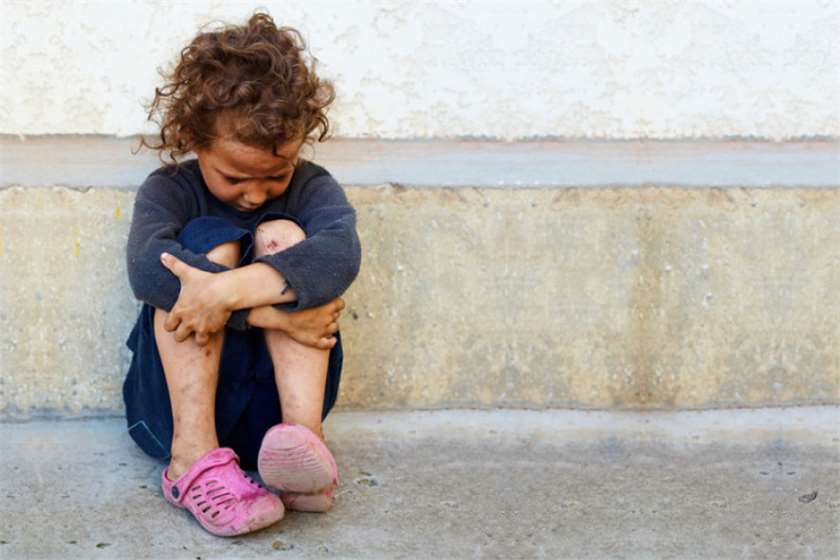
Each one of us has secrets. For some of us, it's something about the embarrassing moments, while in case of others, it's about the pain they went through and discussing it isn't an option. Some of us feel blessed to have parents for all the good things that we have seen together, memories we have cherished together, whereas, some consider their parents as a curse in their life.
Troubled childhood might seem like a distant issue, but it is one of the major issues in today's world. Troubled childhood or being neglected by your parents, most of us might not be able to relate to the feeling, but there are people who can relate to when an individual would feel a lot of pain in discussing their childhood.
Different organizations have a different definition of child abuse or child neglect (Child neglect is a form of child abuse, and is a deficit in meeting a child's basic needs). According to Child Help, Child abuse is when a parent or caregiver, whether through action or failing to act, causes injury, death, emotional harm or risk of serious injury to a child.
The worst part about child abuse or having a neglected childhood is that most perpetrators of child abuse and neglect are the parents themselves.
In the total cases of child neglect, 79.4% of the perpetrators of abused and neglected children are the none other than the parents of the victims. Out of those 79.4% cases of abuse by parents, a whopping 61% of them exclusively neglect their children.

(Image Courtesy: Act for Kids)

(Image Courtesy: LV Criminal Defenses)
#2. Every 1 in 5 women and 1 in 13 men have reported about being sexually abused as a child by their close relatives, or acquaintances.
For a layman, child abuse may seem like an odd personal problem, but from the perspective of a nationalist, the increasing cases of child abuse is an alarming threat to the country. As every statesman talks and stresses on the importance of youth being the future of their nation, and their role in nation building, the development of the country is measured by the well-being of their youth.
The consequences of child abuse or maltreatment makes a child vulnerable to impaired lifelong physical and mental health, and the social and occupational outcomes can ultimately slow a country's economic and social development.
The children with a neglected childhood will grow up into mentally/emotionally troubled adults with a disturbed mind, decreasing their productivity, which ultimately makes them very unsuitable for any kind of responsibilities. Every nation knows that their true strength lies in the strength of their youth. So, it’s needless to elaborate on the importance of taking precautions and control the child abuse statistics from increasing.
The physical, emotional, and cognitive developmental impacts from child neglect in early childhood can be detrimental as the effects of the neglect can carry on into adulthood.
#1. Are Very Tough On Them
Regret is the toughest punishment one can give to oneself. Philosophers and many holy books suggest that it's better to forget someone for his/her sin as an act of punishment. How this applies to the victim? When someone suffers through something, firstly they blame the perpetrators and then they blame themselves for letting the 'thing' happen to themselves. The regret and constant self-blaming kill the soul steadily.
The adult survivors of childhood abuse live with a wound that never heals and they keep on blaming themselves for it. The neglected childhood victim grows up to an emotionally blunt adult who often feels angry and disappointed in themselves. Their judgment towards themselves can be harsher as compared to their judgment to others. Being a victim, they’re constantly engaged in the act of self-criticization of oneself for saying or doing something stupid or wrong.

(Image Courtesy: NSCC)
#2. Lack Of A Sense Of Belonging
The sense of belonging is a very common emotional need of every human, and everyone feels good to know that they belong to something and are important to someone. This sense of belonging is very important in every individual's life as it acts like an emotional medicine that helps in finding a value in life and in coping with intensely painful emotions.
However, in case of a neglected childhood victim, this sense of belonging is missing. As said above, the victims can be really harsh on themselves, in a similar way, they assume they're not important to anyone despite the uncompromised love and care the loved ones pour on them.
The victims feel like they do not belong anywhere, even among family or friends. And they constantly keep them self-distant from the others to be just left alone and feel uncomfortable in social situations. This happens because while growing up, their parents failed to notice their child's comforting issues which makes them feel unheard and they start feeling unimportant, wrong, or unacceptable. As a result, these children grow up into adults who suppress their emotions and build an emotional wall around himself/herself to protect themselves from getting hurt.

(Image Courtesy NSPCC)
#3. Start Loving Independence
Independence or the urge to stay and live alone is a very common trait among adults. Someone living with his/her family from a long time would always like the idea of staying alone, maybe for some time if not forever. However, it is after they start living alone, they feel it's good, but only for a limited time. On the contrary, adult survivors of child neglect start loving their independent life and feel proud of it. They feel proud of the lack of need to rely on others for anything in their life. This love for independence and loneliness makes it difficult for them to ask for help, even in the worst situations.
(Image courtesy: She Knows)
#4. Feeling Of Uncertainty Of Meeting Their Goals In Life
Every adult grows up and finds a motive to live which we even call goals of life. We take time and discover you to find what we really want to do and how we're going to achieve our ambitions. We make an organized plan for the future that can help us overcome struggles and achieve our goals. But, the child abuse survivors feel difficulties in recognizing their needs and strategize an organized plan to follow and achieve their ambitions. The victims feel that there is something wrong with them and struggle with their self-discipline.
#5. Feeling Of Never-Ending Isolation
The constant feeling of being vulnerable to getting hurt can restrict one's freedom. Something similar to the folklore about the man who isolated himself in his bedroom and never stepped outside it because he feared something will kill him. Ultimately he died after his roof collapsed and fell on him.

(Image Courtesy: The Luxury Spot)
The victims of childhood neglect victims sometimes feel that they could easily live in isolation as a hermit, and often confine themselves to their room to protect themselves from being bullied or ridiculed.
#6. Are Not In Touch With Their Feelings?
To solve any emotional problem, it is important for them to get in touch with their feeling and face them. It's not easy though, even for normal adults but they somehow learn it with time.
The survivors may have difficulty in identifying their emotions and facing it to solve their problems. They are often surrounded by feelings of misery, irritation, and emptiness without any identifiable reason at all. Also, the victims have trouble calming down when upset about anything. Talking about weakness and strengths, they (victims) often find it difficult to cite their strengths and weaknesses.
Deep down, victims feel like they are frauds, hiding behind a mask of competency. It's like there is something that holds them back from opening up in social situations and keeping them away mentally.
#1. Learn To Differentiate Between Positive And Negative Emotions
Living a life disconnected from your feelings can be swallowing you from the inside, and you can't-do anything about it even after being aware of it. The first step is to overcome the trauma of child neglect is to learn and identify the positive and negative emotion. Once you learn how to identify and differentiate between the two, you can focus on noting subtle nuances of feelings. This habit will bear fruitful results with time.

(Image Courtesy: The Flourishing Center)
#2. Identify Your Needs And Act To Meet Them
"Necessity is the mother of invention" The proverb will act as your guide in all your tough times and will help you to overcome all your emotions. Being a victim of child neglect, you might not be aware of your own needs and typically don’t feel like meeting them. Develop your emotional vocabulary and try to find out your needs and then react in a positive way to meet your needs.
#3. Acknowledge The Belief As A Belief, Not A Fact
If you finally achieve the success in identifying your needs, the next thing is to achieve your goals. But, you might not be sure if you can really achieve it due to your constant beliefs that have been deconstructing you for a long time. It's okay to hold onto your beliefs, but don't consider your beliefs as a true fact because they may not be true, and always take the risk. Like everyone else on the planet, you have emotional needs that you deserve to have met, no matter what you experienced in childhood and you have to take the risk to find out if you can or cannot.

(Image Courtesy: Answers in Reason)
#4. Be Gentle And Start Caring With Small Steps
The last but not the least, start caring for yourself. You don’t need a nanny for that, you’re good to yourself. Start being a little gentle with yourself and spoil yourself with your love and care and with the ones you’re receiving it from your beloved people.
Whenever you feel like failing, just remind yourself that good things take time to happen. As people always say, Rome wasn’t built in a day!
Whether it's a physical wound or an emotional one, it's better to clean the wound and expose it to the light of day; allowing it to heal. The same process applies to the traumatic wound you suffered in your childhood. Be a strong person and heal yourself before anyone even feels pity on you.
Nothing will change if you keep on blaming yourself and keep weeping over your past. Life is about living in the present and prepare for the future. What happened in the past is gone with time, and weeping over it and punishing yourself won't change. So, muster some courage to bring the wound out of hiding, give it some light and air, and you’ll be on the road to healing.
Solutions To Prevent And Restrict More Cases Of Child Abuse Or Child Neglect
Many National and International organizations are trying their best to prevent children from being abused. But, the first step to any change starts from us, from our own family. As shared above, in 79.4% cases of child neglect, the perpetrator is a parent, so the first step is to stop it from happening in your family and then look outside.
The precautionary step is to prevent child maltreatment before it starts. This alternative is feasible but it requires a multisectoral approach to National and International standards. National and International agencies like UNICEF, WHO, and many unnamed NGO's are working towards curing the problem with effective prevention programmes that support parents and teach positive parenting skills.

(Image Courtesy: UNICEF)
However, we would like to say that the ongoing care of children by families can reduce the risk of maltreatment of children and minimize the recurrence and its consequences.
We hope you liked the article. If you have something to share that you have been trying to, but couldn’t do due to unavoidable circumstances, open up now. We and your loved ones are there to listen and help you out, so don’t hesitate. Lets us know your opinions about the article, most importantly your opinions on the issue. Also, if you want, or if you have, suggest a solution to reduce the numbers or end it completely.
(Featured Image Courtesy: Science Today)

28 Opinions

3 Opinions


