

Do you know what exactly is influenza or flu, what are its symptoms and how long does flu last?
Explore to learn more about the infection and prevent yourself from coming in contact with the illness.

(Image Courtesy: The Weather Channel)
What Is Flu?
Flu is a contagious respiratory illness which shows quick symptoms and is most commonly accompanied by body aches, dry cough, and fever.
Caused by an influenza virus, this seasonal disease usually starts spreading in early October and lasts until May, peaking in the months of December, January, and February. Although many of its symptoms are observed, there can be some variation in how the flu develops in an individual depending on the patient’s age and general health.

(Image Courtesy: Alabama NewsCenter)
What Are Its Symptoms?
The most common symptoms of flu are fever, cough, runny nose, headache, sore throat, joint pain, muscle aches, weakness, and fatigue.
While nasal congestion and sneezes are commonly seen in the cases of common cold, some people suffering from the infectious disease have also showcased these nasal symptoms. Although rare in adults, vomiting, may or may not be coupled with diarrhea is observed in about 10 to 20 percent of the children suffering from it.
Since the symptoms of flu, common cold and fever ) are quite similar; the illness is often not diagnosed in many cases.
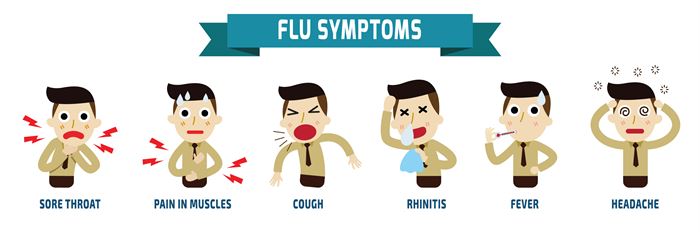
(Image Courtesy: Practo)
How long Does The Flu Last?
The flu continues in adults for about 3 to 5 days. However, the feeling of malaise, a general discomfort, may last up to a week or longer. In old patients, children, and people, who have pre-existing medical conditions, the chances of the development of pneumonia, a severe lung infection, with flu are quite high. In those cases, an urgent treatment or hospitalization may be required.

(Image Courtesy: The Kettle & Fire Blog)
What Is The Treatment?
Most patients only suffer from a mild case of the flu, which does not require medical care. If you have caught the bug, stay at home and rest, and avoid coming into contact with others. However, old people, children, and patients already suffering from other medical conditions which have come in contact with the flu should consult a doctor.
Antiviral drugs can treat flu, but unlike antibiotics, these are not over-the-counter medications, and you need a doctor’s prescription to buy these. However, they can help control the symptoms, lessen the time you are sick and also help prevent complications like pneumonia.

(Image Courtesy: NetDoctor)
Can It Be Prevented?
Fortunately, the flu can easily be avoided by following simple steps. The first thing you should do is take a yearly flu vaccine. But, since the vaccine is not effective in all the cases, further prevention is required.
Coming in contact with sick people and touching your eyes, nose, and mouth are some things you should avoid to keep yourself away from the disease.
Staying at home, avoiding public places and covering your nose and mouth while coughing or sneezing are some ways you can stop it from spreading when you are infected.

(Image Courtesy: Coeur)
So, the flu is neither something that you should be worrying too much about, neither it is something you can take lightly. With proper precautions, you can avoid catching and also keep it from further spreading.
Share your views with us through your comments in the dedicated section below.
(Featured Image Courtesy: Science)


