
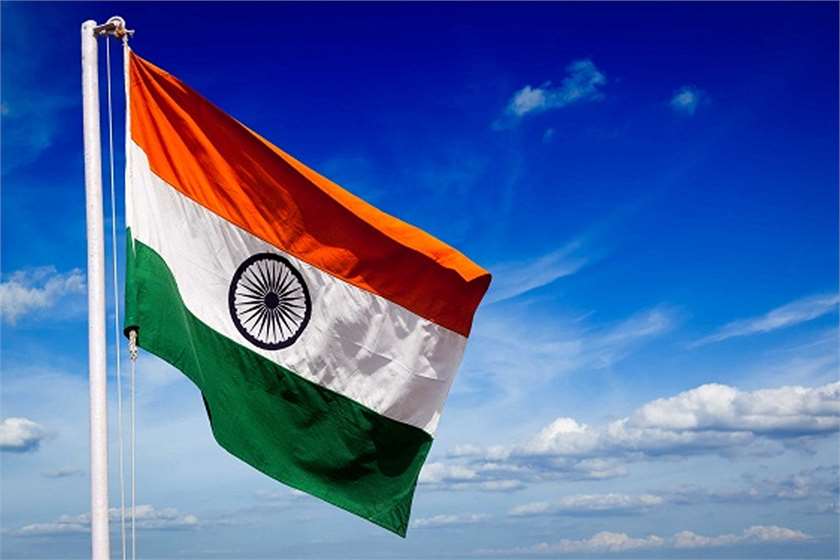
The Indian flag, also known as the Tricolor, brings pride and the feeling of patriotism to every Indian. The Indian flag was adopted on 22nd July 1947, just a few days before India's independence. There are horizontal stripes of saffron, white and green on the Tricolor.
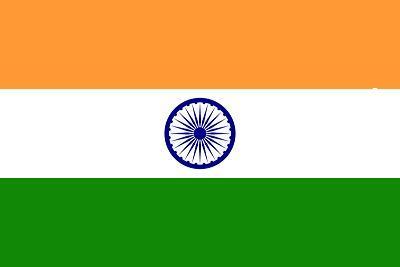
Saffron is at the top, white in the middle with a blue chakra, and green is at the bottom. Each color on the flag has a special significance. The Tricolor signifies unity even when there is so much diversity in India.
Significance Of Color In Indian Flag
#1. Saffron: The topmost part of the Tricolor is saffron. It signifies the courage and strength of the people of the nation. It stands for the resilience and sacrifices of the freedom fighters.
#2. White: The middle part of the Tricolor signifies peace, honesty, and truth. The White color also stands for cleanliness and knowledge according to Indian philosophy.
#3. Blue Chakra: The blue chakra in the middle of the Tricolor portrays the “wheel of law”. In the 3rd century, Mauryan Emperor Ashoka designed the chakra. It is also called the dharma chakra. This signifies that there is life in movement. The 24 spokes on the chakra signify Love, Courage, Patience, Peacefulness, Goodness, Faithfulness, Selflessness, Self-Control, Truthfulness, Righteousness, Justice, Mercy, Gracefulness, Sympathy, Spiritual Knowledge, Moral Values, and Spiritual Wisdom.
(Image Courtesy: India Celebrating)
#4. Green: The lower part of the Tricolor signifies fertility, prosperity, and faith. Faith is the most precious entity to Indians. According to the Indian philosophy, green is the color of happiness and life. It signifies that our lives are dependent on our land and soil.
Indian Flag Facts
The Indian flag or the Tricolor has been associated with many interesting and important events. It has a vast history to its credit and some very interesting facts.
#1. During India's fight for independence, several designs of the Tricolor were used and adopted.
#2. The first Indian flag had many religious symbols along with eight roses on it. In the center, it was written “Vande Mataram”. This flag was first hoisted on 7th August 1906 in Kolkata.
#3. The final Indian flag was designed by Pingali Venkayya who was from Andhra Pradesh.
(Image Courtesy: Quora)
#4. The Indian flag is made of Khadi. It is a special hand woven cloth of silk or cotton. It was made popular by Mahatma Gandhi during the independence struggle.
#5. All three colors on the Indian flag are equally proportionate.
#6. The chakra in the middle has 24 equally spaced spokes. Each spoke has a different significance.
#7. According to the Indian flag code, it is prohibited to touch the flag on ground, water or floor.
The Indian flag or the Tricolor signifies the unity, strength, courage, and faith of the people of India. It signifies all the sacrifices that the freedom fighters made for India's independence from the Britishers.
Liked what you just read? Let us know in the comments section below if you found this article informative and exciting to read.
(Featured Image Courtesy: Local Address)

36 Opinions

106 Opinions

 Share
Share


Pingali Venkayya designed the flag of India which consisted of a spinning wheel in place of the Ashoka Chakra. However, the new- research by Captain. L. Panduranga Reddy suggested that this is not the established truth. The truth that has fallen into place by the new researches is that the Indian flag has evolved over years after the Independence day. Pingali Venkayya is a mere contributor to the design of the Indian Flag. The new research proves that there was a Hyderabadi Muslim Woman named Suraiyya who actually designed the tricolor flag of India.