
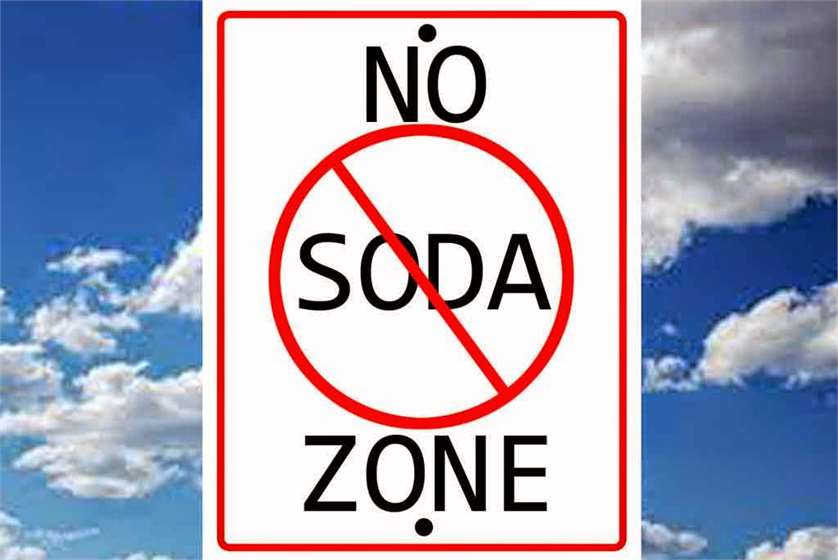
Tamil Nadu shops boycott soft drinks of PepsiCo, Coca-Cola
After a petition by the PETA led to a Supreme Court ban on Jallikkattu, protesters seeking a return of the sport had turned their ire on US cola giants such as Coca-Cola and PepsiCo.

24 Opinions


Pepsi Coca Cola ban will lead to increased demand of Indian Cola
The boycott of Coke and Pepsi in Tamil Nadu could definitely be a good news as it will increase the demand for Indian cola. Also it can be great opportunity for the in-house Indian company to expand beyond its comfort zone which is limited to the state at the moment. Post-corporatisation, the company’s revenue has seen drastic increase but profits have not gone that up. That is, where the boycott, if is going to be successful, can help the company desist the utter dominance of Coke and Pepsi which control 80% of the soft drinks market in India.
And it also opens the door of opportunity for newer entrants in India. A 2016 Nielsen study shows that soft drink sales in India increased by 11% since 2014. Indians on an average consume 5.9 billion litres of soft drinks a year. Every Indian individual drinks atleast 5 litres of soft drink every year.
Thus, the Pepsi & Coca Cola ban can be a real good news for the Indian Soft drinks.
The Madurai bench of the Madras High Court on Thursday dismissed two PILs against supply of Thamirabarani water to co-packers of Pepsi and Coca Cola.
The court had in November last year granted an interim injunction, restraining multinational beverage companies Coca-Cola and Pepsi from taking water from Thamirabarani river.
The Tirunelveli District Consumer Protection Association secretary DA Prabakar had filed a petition demanding a ban on supply of water from Thamirabarani river to the companies.
The petitioner had stated that there were about 20 integrated drinking water projects in Tuticorin, Tirunelveli, Ramanathapuram and Virudhunagar districts which depend on the Thamirabarani river.
At a hearing in February this year, the petitioner's counsel had said agriculture is the main source of income to the Tirunelveli people and due to supply of water to the companies, the agricultural activity and livelihood of the people was getting affected. Besides, as per the Supreme Court order, water should not be taken for commercial purposes.
However, Coca Cola and Pepsi said there were many companies that drew water from the river, but the petitioner had filed a case against the two companies only.
The government submitted counter affidavits by the public works department and the Tirunelveli collector asserting there was sufficient water in the river and only the surplus of water is channeled to companies.
Meanwhile, shopkeepers in Tamil Nadu began removing Pepsi and Coke from their shelves on Wednesday after a call by the state's Traders Federation to boycott the soft drink giants.
A ban was proposed on sale of these brands at the height of pro-jallikattu protests in the state in January, after it was claimed that the US-based NGO People for the Ethical Treatment of Animals (PETA) was responsible for the Supreme Court ban on the bull-taming sport.
Coke and Pepsi disappeared from most shop shelves in Tamil Nadu on Wednesday, as traders in the state began a boycott of the multinational cola giants.
An apex body of traders associations in January called for a boycott of soft drinks made by PepsiCo India Holdings Pvt. Ltd and Coca-Cola India, but some shops have also stopped selling other products made by the two companies.
“Most of the small traders have already boycotted; bigger shops still continue to sell. It will take few more days to assess the actual impact. So far, it has been good and we would continue to campaign against the products,” said a member of the apex traders’ association called Tamil Nadu Vanigar Sangangalin Peramaipu.
After a petition by the US-based People for the Ethical Treatment of Animals (PETA) led to a Supreme Court ban on Jallikkattu, protesters seeking a return of the bull-taming sport had turned their ire on American cola giants such as Coca-Cola and PepsiCo.
The products, though, are still available at outlets of large retail chains and supermarkets such as Reliance and More.
The traders’ association had said in January that its decision was made with the approval of 6,000 affiliated member associations. Over 1.5 million members, it said, have decided to promote local beverages instead.
Coca-Cola’s bottling operation in Tamil Nadu is managed by its bottling arm Hindustan Coca-Cola Beverages, and an independent co-packer. Hindustan Coca-Cola, in 2015, had to scrap plans for a new bottling plant at Perundurai in Tamil Nadu following local protests. PepsiCo has three bottling plants in Tamil Nadu.
Both Coca-Cola and Pepsi did not want to comment on the boycott, but the Indian Beverage Association (IBA) issued a statement saying it was “deeply disappointed” with the move.
“This call is against the proven fundamentals of robust economic growth and against the clarion call of Making in India. The boycott call also violates the rights of the consumer to exercise choice,” the IBA said in a statement.
Pepsi and Coca-Cola together provide direct employment to 2,000 families in Tamil Nadu and more than 200,000 retailers earn over Rs 400 crore by selling products made by both companies, the IBA added.
“I stopped buying stocks since January, when the (traders’) association decided to boycott. Though I have my shop in Chennai, I’m a native of Tirunelveli and have seen the protests over the last few years, when Pepsi tried to set up a factory,” said N. Senthil, a small trader in Chennai.
The IBA said its member companies have skilled farmers and retailers who are “deeply involved in ensuring the welfare and sustenance of local community” and have adopted local villages, restored water bodies, built check dams and helped in poverty alleviation. The association said it is open to engage with any organisation that has a different point of view.
Agitation against these soft drink companies is not new to Tamil Nadu. In November 2015, hundreds of villagers protested in front of the SIPCOT Industrial Growth Centre in Gangaikondan village in Tirunelveli after the state government allowed PepsiCo to build a factory there.
The villagers were against the drawing of water from the Thamirabarani river. There have been online campaigns against the factory too. However, in November, the Madurai bench of the Madras high court granted an interim injunction restraining Coca-Cola and PepsiCo from using the waters from the river.