

What is BMI? Body mass index (BMI) is a measure of body fat based on your weight in relation to your height and applies to most adult men and women aged 20 and over. According to the Centers for Disease Control and Prevention (CDC), a BMI of 30 or above indicates obesity.
In children, age and gender are considered in tables that are produced for growth charts by the CDC. However, BMI is calculated with the same formula for both children and adults. In general, children are assessed as being underweight if they fall below the 5th percentile and overweight/obese if they fall above the 95th percentile.
#. What Is The BMI Formula and BMI Index?
The BMI was developed by Adolphe Quetelet in the 1900's. It is independent of gender and age. It is the same formula for men, women, and children. The BMI calculator is suitable for women just as it is for men and children. For kids, the result is, however, varied. The formula to calculate BMI requires information about a person's height in meters and weight in kilograms. The BMI formula is: BMI = weight (in kilograms) / height (in meters) ^2
(Image Courtesy: Quora)
#. How To Measure BMI?
You can calculate your BMI on a regular calculator by following these steps:
Determine your weight in kilograms, then divide by height in meters. Divide the result again by height in meters and you will have your BMI. You can compare your BMI by using WHO’s BMI Table.
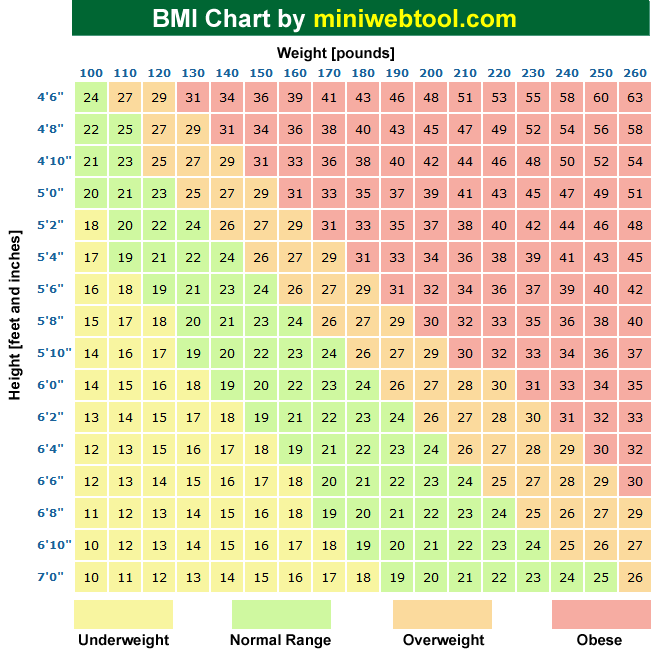
(Image Courtesy: Mini Web Tool)
#. Healthy BMI
Maintaining a healthy weight will result in a healthy BMI. Excess weight increases how hard the heart has to work, it also raises blood pressure, blood cholesterol and triglyceride levels and lowers HDL (good) cholesterol levels. Excess weight can make a person more likely to develop diabetes. Lifestyle changes that help you maintain a 3-5% weight loss are likely to result in clinically meaningful improvements in blood glucose, triglycerides, and risk of developing type 2 diabetes. Greater weight loss can also help reduce blood pressure and improve blood cholesterol. A healthy BMI lies between 19 to 24.9.
#. What Is A Preferred BMI Value?
In broad terms, a BMI of under 18.5 places you in the underweight category and if it lies anywhere between 18.5 to 24.9, you are deemed as normal - this is what we should all be aiming for. This moves onto being overweight with a BMI of between 25 to 29.9, obese at over 30 and morbidly obese; if you have a BMI of over 40.
With rising levels of obesity and obesity-related illnesses, throughout the developed world, it’s fair to say anything that educates people about their weight is a good thing. BMI measurements may be a debatable issue as the inaccurate BMI, which is over 40, might make you vulnerable to diseases and problems like diabetes, high blood pressure, heart disease, stress on your joints and overall, early death. BMI readings must be taken seriously as they play an important role in helping you to manage your long-term health.
Liked what you just read? Let us know what you think in the comments section below.

 Share
Share


