

Have you ever noticed that if one person yawns, the other begins to do the same? Why is that so? Probably because looking at a person yawning and not giving in to the urge of doing the same is quite challenging. That's why they say yawning is contagious! It activates a chain reaction as soon as one yawn.
But is there any logical explanation behind the infectious yawning? There are various theories of the phenomenon that explains why this happens. While some focus on the idea of empathy, others just look into the functioning of the brain.
Here are the significant theories on contagious yawning:-
#1. A Sign Of Empathy
The studies conducted at the Baylor University by Brian Rundle, a doctoral student in psychology and neuroscience, put forth a theory that suggests empathy as the reason behind contagious yawning. It is said that humans are in sync with the emotions of other people. Just the way you involuntarily smile when others are smiling at you, yawning has a potential of producing a similar effect.

(Image Courtesy: Science)
#2. A Primitive Reaction
Another research conducted by Dr. Martin Schurmann, a Finnish academic, on contagious yawning states that it is nothing but a primitive technique of survival. Yawning is a warning sign for a possible risk or danger. The practice of showing teeth as an indicator of threat was prevalent among the primitive men. Interestingly, people usually responded to this sign by doing the same. Various studies have shown that this primordial practice has seeped into our psyche in the form of contagious yawning.

(Image Courtesy: Public Radio International)
#3. Lack Of Oxygen
Interestingly, infectious yawning can also be linked to oxygen intake. Yawning is an involuntary reaction to boost our oxygen intake. This indirectly works to keep our mind alert by inhaling more air to breathe. Ergo, when we yawn, we somehow raise a similar sense of alertness among the people around us. Influenced by this alarming sign, the people around you end up giving into the urge of yawning.

(Image Courtesy: Fast Company)
#4. Age matters
An interesting theory associates infectious yawning with your age. According to research conducted at University in Durham, North Carolina by Dr. Elizabeth Cirulli , contagious yawning develops and fades away with age. Younger people are more prone to contagious yawning as compared to the people from the older generation. The reason behind this theory is that as people age, they tend to stop observing the behavior of other people.

(Image Courtesy: Netmums)
#5. A means of communication
Another theory linked to the primordial says that yawning has been an ancient reflexive reaction to communicate with others and to be open to people around you. According to the research conducted by Dr. Robert Provine, a leading researcher on yawning, it was concluded that contagious yawning was also used as a way to exclaim your sleeping schedule and put the sleep cycle of your social group in sync. Even today, humans unconsciously try to match up to the sleeping schedule of their social group by the method of contagious yawning.

(Image Courtesy: Health Greatness)
#6. HCL acid
Contagious yawning can also be understood in terms of hydrochloric acid in our body. The hydrochloric acid, also known as HCL acid, present in our stomach builds up to a large amount when we are lethargic. The highly vaporous acid can easily be inhaled by people around us when we yawn. This, in turn, leads to the vicious chain reaction.
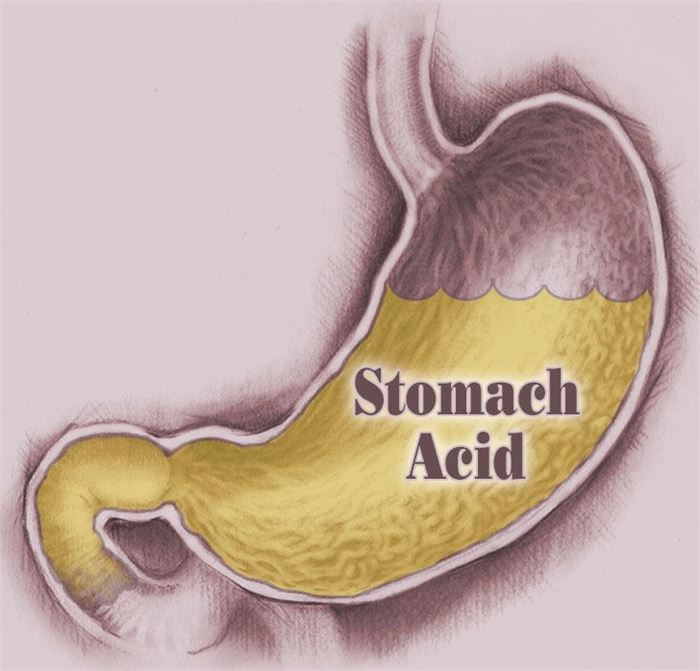
(Image Courtesy: Hydrochlorica)
If you have any interesting theory or episode about contagious yawning, feel free to share. We would love to hear from you. Kindly use the comment box to share your thoughts and opinions with us.

 Share
Share


