
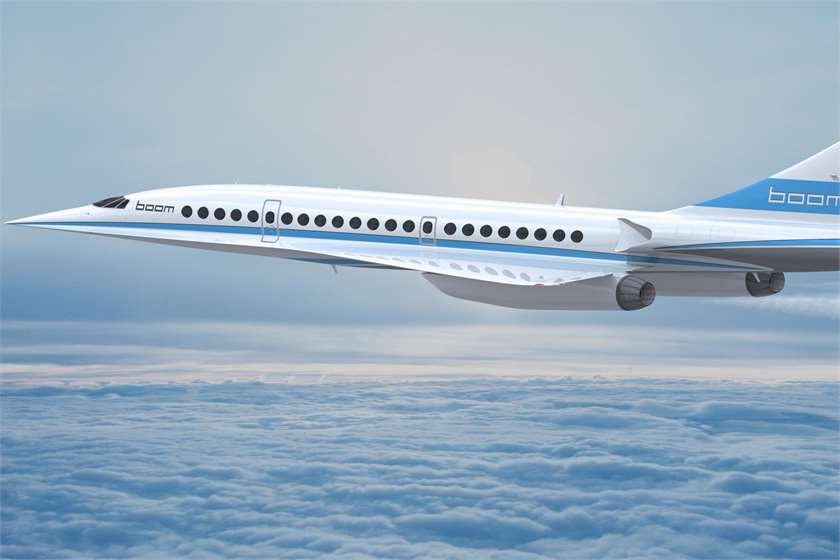
Are you ready to travel in a supersonic commercial plane that promises you to cover the distance between New York and London in 2.5 hours? A start-up company claims that it will make super-fast passenger planes that will reduce the travel time between the countries to a mere three odd hours.
Boom, an aerospace company based in Denver, revealed their plans to introduce super-fast aircraft that allows passengers to take a quick trip to the neighboring continent in a matter of few hours.
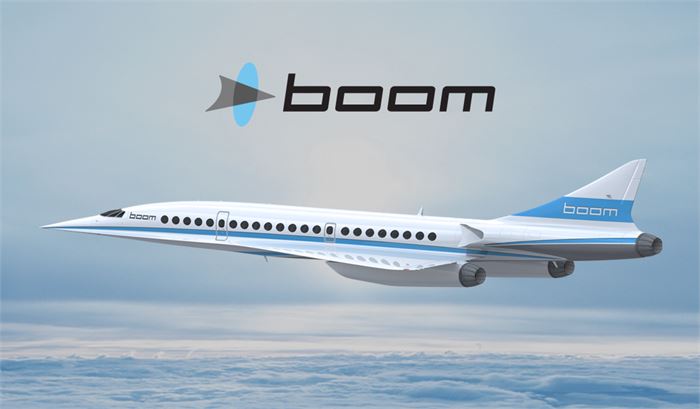
(Image Courtesy: Boom Super Sonic)
At the Paris Air Show on Tuesday, the representatives of the company spoke about their future plans to make faster than sound airlines in the next six years if it passes all the necessary certification hurdles. It also spoke about its elaborate plans to shuttle passengers from Tokyo to San Francisco in 5.5 hours as compared to the current 11hours journey via other planes. Not just that, it also aims at reducing the travel time between Los Angeles to Sydney from 15 hours to a mere 7 hour’s journey.
With this, the company announced that five airlines have already placed more than 70 orders for Boom’s faster than sound passenger airlines. The reservations made by airlines like Virgin among others will be announced officially by the company in the coming months.
While Boom seems to be optimistic about delivering its promised product, some experts are apprehensive about their claims. They are reminded of the European aircraft Concorde that had also promised to serve as the transatlantic supersonic flight in 2003. However, it was never commercially viable as the fare of the flight was not economically feasible for most travelers.
Reacting to the failure of European aircraft Concorde, the company states that the engineers, working to translate this figment of imagination into reality, are adopting better engines and improved aerodynamics and material to reduce the cost operations and maintenance of the aircraft, thereby reducing the fare prices as well.
If Boom actually lives up to its promise of delivering supersonic aircraft, it could be the new face for the future of aviation industry!
(Feature Image Courtesy: The Independent)

 Share
Share


