
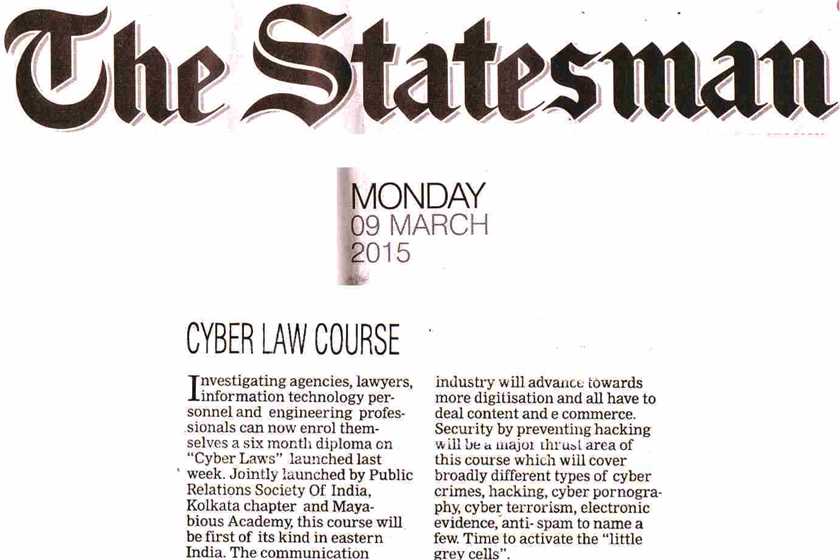
Khushwant Singh, the renowned journalist and writer once lamented that The Statesman is the best newspaper in India but enjoy the lowest circulation.
The first Prime Minister of our country Pandit Jawaharlal Nehru started reading this legendary newspaper every morning since the days of India’s freedom struggle.
In 1928, when The Statesman urged the Congress leaders to cooperate with the controversial Simon Commission, a campaign was launched to boycott the newspaper, but it did not dissuade Pandit Nehru from reading his favorite daily.
In 1895, noteworthy English daily The Hindu wrote, “The Statesman is singularly free from prejudice and its sincere advocacy of the Indian cause is well and widely known. The pro-Indian attitude of our contemporary enhances the values of its opinion.”
Nirad C. Chaudhari, the distinguished writer once said ‘The Statesman has replaced Macaulay among the Bengalis in their worship of fine English. If you want to write good English, read The Statesman, our elders and teachers counseled us.’
Robert Knight, who founded this legendary newspaper in 1875 after relocating to Calcutta (Kolkata) from Bombay (Mumbai) with a high reputation of being an intrepid and plucky journalist, encouraged critical reviews of the actions and policies of the British government, thereby distinguishing him from his British contemporaries.
Knight welcomed the formation of the Indian National Congress in 1885.
“The Congress needs no other justification than the truism that if the people of India are eager to enter upon a course of real progress, it can only be by the learning to govern themselves. No people can make any solid or enduring progress under any system of government which does not devolve upon them more or less completely the responsibility for their own advancement.”
The Statement aptly described as the Manchester Guardian of the East, has had a long line of competent and committed editors who have left a permanent imprint on the newspaper.
In numerous occasions it had to face the wrath of the imperial government and on one such occasion distinguished nationalist leader and one of the pioneers of India’s freedom struggle, Gopal Krishna Gokhale had to exercise his influence to rescue the then editor Samuel Radcliffe from the wrath of the Governor General Lord Minto.
During the 1920s the newspaper was an epitome of the rightist point of view. It was controversial and at the same time liberal. Its editorials were thoroughly scrutinized and analyzed by the readers with diverse political outlook.
The newspaper continued to flourish after independence and was of the dailies that adversely suffered during National Emergency (1975-1977) declared by the Indira Gandhi led Congress (I) government for the anti-government and anti-anarchy stand of the then editor C.R.Irani.
Although the popularity and circulation of the centenarian newspaper have eroded with time, yet it is still regarded and esteemed as a vibrant and independent daily.
The newspaper, in particular the editorials continue to voice its views fearlessly, making critical observations on government policies that equally affect the rich and the poor.
Some of its investigation-based stories continue to receive national prominence even in the days of audio-visual and online news.


24 Opinions

 Share
Share


