
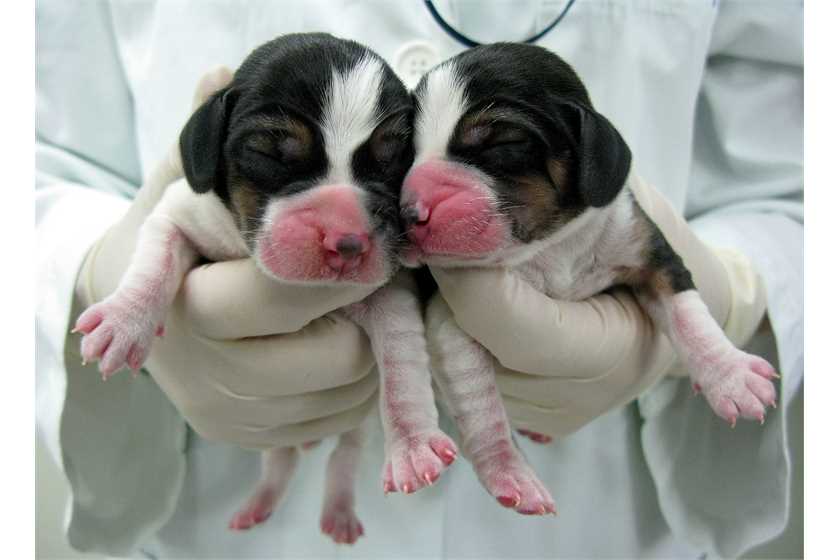
Cloning pets and animals for various purposes or for experiments is a step taken by humans that don't go along with nature. We can get the lookalikes, but getting the original of the species have been not up to the mark. People often clone their pets in order to make themselves free from the emotional stress they get when their pet dies. But cloning is not an easy process. Nor it is a common one. Cloning has several risks and this kind of procedure is only in the recent advancement of technology. No doubt it gives the exact cloning of mammals, but at the same time, it has several implications, including the risk of the animals that are to be cloned.
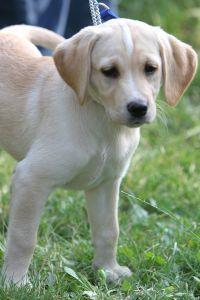
I do not think that animals should be cloned in any way. The fact that nature has created a wide range of species is itself a thing of blessing. We don’t need to hamper this process. Cloning different species is just an alteration of going against the usual flow of nature. At the same time, we humans have not yet successfully tried to take over the cloning process. There are several negative aspects of this cloning act. Just for the sake of our own purpose, it is not justified to keep innocent mammals and expose them to the cloning process. Usually, pets are cloned. That is because people have a deep love for their pets and they can't tolerate the outcomes of their death. But cloning of pets is not at all a process that should be done by us.
At times what is not reflected in the upbeat processes of cloning of the new puppies are the missteps that may have preceded them in the process of making lookalikes or clones. Cloning well-evolved creatures, particularly puppies, is troublesome and at times is very risky. Researchers need to make and embed numerous developing lives to birth a solid one. Amid the cloning procedure, DNA from the grown-up benefactor must be reconstructed back to its embryonic express. This particular process is termed as a dangerous one as too many data is still insufficient regarding the same. The recent RNL Bio, the business pet-cloning organisation, hasn't given a great deal of subtle elements on the cloning procedure and it constantly criticises the process calling it a drastic step taken against nature. Be that as it may, as indicated by several types of research, the achievement rate utilising the present technique is a part of the single digits. In a later trial testing another approach, two puppies were conceived from 84 fetuses embedded into five surrogate mums. This alone proves how complex and harsh is the process of cloning is for pet animals.
In spite of years of research, more than 95 percent of cloning endeavours fall flat, even with broad veterinary medication. This is merely due to negligence and lack of knowledge of the cloning procedure. This type of technology has been just recent and a lot is needed to study the aspects of cloning. Birth abandons, physiological hindrances, disease, and sudden death keep on being the standard, not the special case, with cloning. Apparently, solid clones have still not yet achieved a complete green signal from several organisations of different countries. Issues happen with cloning much more regularly in comparing to with whatever other strategies of technology that we are outsourcing in recent times.
Extensive Offspring Syndrome, a common lethal condition connected with a large group of anomalies, happens in more than half of cow clones. Even horses and dogs are affected by this syndrome, although the cows account for the most number of cases. Although the cows that are countered are in less than 6 percent of routinely reared dairy cows. Hydrops, another common deadly condition in which the creature swells with liquid, happens in almost 28 percent of dairy animal clones, yet infrequently something else. A high rate generally terms at pregnancy misfortune, pregnancy confusions, difficulty in walking, and surgical intercession is special to clone pregnancies. Considering these implications it is a dangerous process that is carried out and needs more years to be researched upon.
We people surmise that if there is some kind of problem with us, we make a drug, and then do what with it? We simply test it on creatures. We never test it on ourselves. Maybe the government procedures and strict laws are making us do this. But we never had the real guts to experiment on our own species. Therefore, cloning is only made on these innocent creatures. The fact that creatures are not individuals does not imply that they don't feel torment. They do feel feelings, and they like or abhorrence certain things. Envision is something that we people were the ones getting tried on, worked on and probed. How would that make us feel? We would feel torment, stretched, terrified, and different feelings. Animals too have these feelings. I am stunned that the general population who do this to the creatures don't feel any blame about what they are doing. It is simply wrong in any capacity, shape or frame until a researcher works out the crimp in cloning. Cloning mammals and pets only for self-purpose or experiment process is a harsh thing.
We, humans, are the most feared species among all. We have powers which other mammals don't have. And we at times forgo these powers. But one day nature will repay back all the damage we did to it and that would be without a proper warning. Cloning of pets should be banned and we should try to live with the laws of nature and abide by its rules.


203 Opinions

54 Opinions

19 Opinions

13 Opinions

15 Opinions

27 Opinions

 Share
Share


