
There are about 8.8 million children under 5 years die every year because of reasons that can be prevented such as undernutrition, diarrhea, pneumonia, measles, malaria. South Asia has the highest burden of infant and child malnutrition and mortality in the world. Undernutrition has been reported to be the consequence of a variety of interlinked factors such as inadequate access to food and health care services, lack of education, low income, large family size, wrong beliefs and taboos, economic policies, natural calamities, improper feeding practices, lack of time for child, nutritional status of mother, frequency of illness, unhygienic environmental conditions, and preventable infections.
However, suboptimal infant and young child feeding practices (IYCF) and micronutrient deficiencies are major contributors to undernutrition, morbidity, and mortality in children. The World Bank has emphasized that improving infant - feeding practices especially for children younger than 2 years of age should be a high global priority for controlling undernutrition.
Breastfeeding and weaning practices have been associated with the nutritional well-being of infants and young children. Proper nutrition is essential during early years of life to ensure optimal physical and mental development. According to the WHO report, complementary feeding should be - timely, all infants should start receiving foods in addition to breastmilk from 6 months onwards; - adequate, the nutritional value of complementary foods should fulfil the needs of rapidly growing child; and - appropriate, foods should be diverse, of appropriate texture and given in sufficient quantity. An infant requires foods other than breast milk from six months of age to meet its nutritional requirements.
Thus, any on – breast milk foods or nutritive liquids fed to child during this period can be termed as complementary foods. The function of complementary foods is to supplement the nutrients from breast milk and not to replace them from the diet of the infant. Even exclusively breastfed children will become undernourished if they do not receive adequate quantity and quality of complementary foods after 6 months of age.
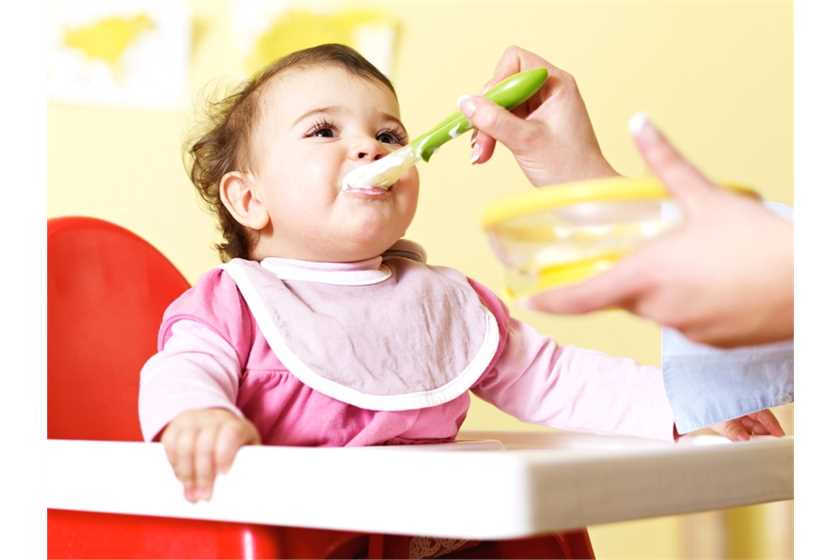
When the infant can no longer get enough energy and nutrients from breast milk alone, that is the appropriate time to start complementary food, which is between 4 and 6 months of age for many babies. At 4 – 6 months the nerves and muscles in the mouth develop sufficiently so that the infant can bite and chew. The new foods are intended to complement ongoing breastfeeding with dietary items.
Feeding of thick porridges, purees, and mashed foods becomes easier as infants can control their tongues better. They start to make up and down munching movements, the teething process begins and they also like to put things in their mouth. Infants at this age are also interested in new tastes. Even their digestive system is mature enough to digest a variety of foods. The production of pancreatic amylase allows digestion of complex carbohydrates.
The 3 signs that indicate when an infant is ready for complementary foods are:
1) staying in a sitting position and holding the head steady;
2) coordinating eyes, hands and mouth to look at the food; and
3) being able to swallow solid foods.
An early or late introduction of complementary foods has been found to be associated with abnormalities of growth and development among infants. There are a variety of reasons why mothers introduce solids foods early, such as family’s advice and also the belief that cereal will help an infant sleep longer at night. Early weaning has been associated with a number of risks that increases the risk of infant morbidity and mortality.
Breast milk can be displaced by complementary foods, leading to reduced production and intake of breastmilk.
It shortens the duration of breastfeeding and in turn, reduces the efficiency of lactation in preventing new pregnancies.
The risk of diarrhoeal diseases and food allergies are increased because of intestinal immaturity which increases the risk of malnutrition.
Infant’s health is affected due to factors such as lack of availability of suitable alternatives or feeding less nutrient dense alternatives to breast milk and risk of microbial contamination of foods.
Solid foods particularly high-protein ones, add to the renal solute load and might contribute to higher plasma concentrations of sodium and urea
It interferes with uptake of important nutrients found in breastmilk, such as iron and zinc.
Late introduction of complementary foods is also seen to create certain problems. Infants who are not weaned at the recommended age will be fed only on breast milk or animal milk.
Late introduction of complementary foods can stop or slow down the infants’ growth and development. Other consequences include:
Inadequate provision of energy and nutrients from breastmilk alone may lead to growth faltering and malnutrition.
Micronutrient deficiencies, especially of iron and zinc, along with vitamin A and riboflavin, may develop owing to the inability of breast milk to meet these requirements after six months of age.
The optimal development of motor skills such as chewing, tongue rolling reflex, and the infants’ acceptance of new tastes and textures, may not be ensured.
The timing for introducing complementary foods reflects cultural practices, characteristics of the mother, advice of physicians, dietary enhancement, and factors influencing growth patterns during the first year of life.


 Share
Share


