
Introduction
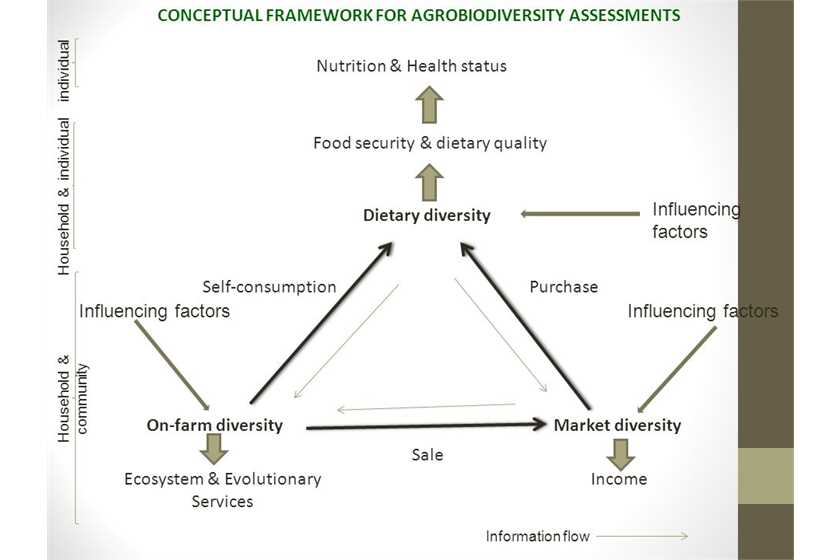
Infant and young children are considered as the major vulnerable populations because of the higher requirements of energy- and nutrient- dense foods required for growth and development (physically and mentally). Dietary diversity has been considered as a potential ‘proxy’ indicator to reflect nutrient adequacy. Dietary diversity is defined as either the total number of foods consumed or the total food groups consumed. Nutrients essential for child growth and development do not come from a single food item but rather from a diet composed of some food items. A measure of the nutritional quality of the diet may, therefore, be its diversity. Healthy diets are therefore said to be those that are most varied.
However, diets in developing countries tend to be generally based on staple foods with limited or no animal products and fruits and vegetables. The diets consumed are inadequate in micronutrients, and the bioavailability of these micronutrients is low resulting in malnutrition. The lack of dietary diversity is one of the major problems among poor populations in developing countries, where resources are limited. Nutritional Status in young children reflected the importance of diversity by the higher dietary quality and increased the likelihood of meeting daily nutrients and energy requirements.
Dietary Diversity Score
Measurement of child feeding practices is complex and the relation between the quality of feeding and children’s nutritional status is difficult to establish. Dietary diversity is usually measured by adding the number of foods or food groups consumed over a reference period. It is a qualitative measure of food consumption that reflects household access to a wide variety of foods. The dietary diversity questionnaire can be used at the household and individual level according to the purpose of the survey. The reference period ranges from one to three days, however, seven days is often used and periods of 15 days have also been reported.
The questionnaire can be adapted for ease of data collection, wherein firstly, all the foods consumed on the previous day during day and night need to be described i.e. 24-hour dietary recall. Food groups can be created such as cereals, roots, and tubers, legumes, nuts, dairy, flesh foods, eggs, vitamin A rich fruits and vegetables, other fruits and vegetables. Is given for infants of 6 to 8 months. For older children i.e. 9 to 11 months and 12 to 17 months age, a score of 1 is given when food from 3 food groups are fed, a score of 2 is given when items from more than equal to 4 food groups are fed and if food from 0 - 2 food group is fed a score of 0 is given.
The Food and Agriculture Organization has given guidelines about various ways of reporting the information collected on dietary diversity:
It is a simple count of the number of food groups consumed at the individual or household level. Mean dietary diversity scores can be compared across population sub-groups and at different time periods.
Dietary profiles based on food groups consumed by a majority of individuals/households can be compared to provide insights on consumption patterns across population sub-groups.
The percentage of individuals or households consuming food groups or combinations of nutrient dense food groups (such as food groups rich in Vitamin A) can be analyzed.
Dietary Diversity and Nutritional Status of Children
Nutritional status of children is influenced by diet. Undernutrition and overnutrition both can be reduced by including foods from diversified diets. However, recently the eating patterns of children have changed drastically with trends of eating more outside the home, having more of snacks, drinking sugar based beverages including skipping of breakfast and consuming few servings of fruits and vegetables.
Studies have reported that nutritional status in young children reflects the importance of diversity. Better diversity was associated with higher dietary quality and increased the likelihood of meeting daily nutrients and energy requirements. Nutritional status and dietary diversity have also been associated with socioeconomic status. Families with greater income and resources tend to have diverse diets. Besides this, they are likely to have access to better health care and facilities and better environmental conditions. Dietary diversity was found to be associated with improved nutritional status i.e. height-for-age, weight-for-age, and weight-for-height. Mothers who feed foods of good quality and from highly diversified sources had children with better nutritional status.
Conclusion
Nutritional status can be improved when the diet of children consists of food items from most of the food groups i.e. cereals, roots and tubers, legumes, nuts, dairy, flesh foods, eggs, vitamin A rich foods and vegetables, and other fruits and vegetables.


 Share
Share


DDS is an important determinant for improving nutritional status of children.